The Home Renovation Decisions That Could Cut Your Cleaning Time in Half
 A mop should never feel like a long-term relationship, yet many homes seem designed to keep one permanently involved.
Renovation decisions usually focus on how a home will look, feel, and function. That makes sense. Nobody wants to spend serious money creating a kitchen that looks like it was assembled during a power cut. But one of the most underrated renovation questions is surprisingly practical: how easy will this space be to clean when real life moves in?
The answer can affect daily life more than people expect. A beautiful room with fussy corners, awkward gaps, dust-loving ledges, and flooring that shows every footprint can quickly become less “dream home” and more “part-time janitorial contract.” Thoughtful renovation choices can reduce the effort needed to keep a home looking fresh, sometimes dramatically.
Choose Flooring That Does Not Collect Drama
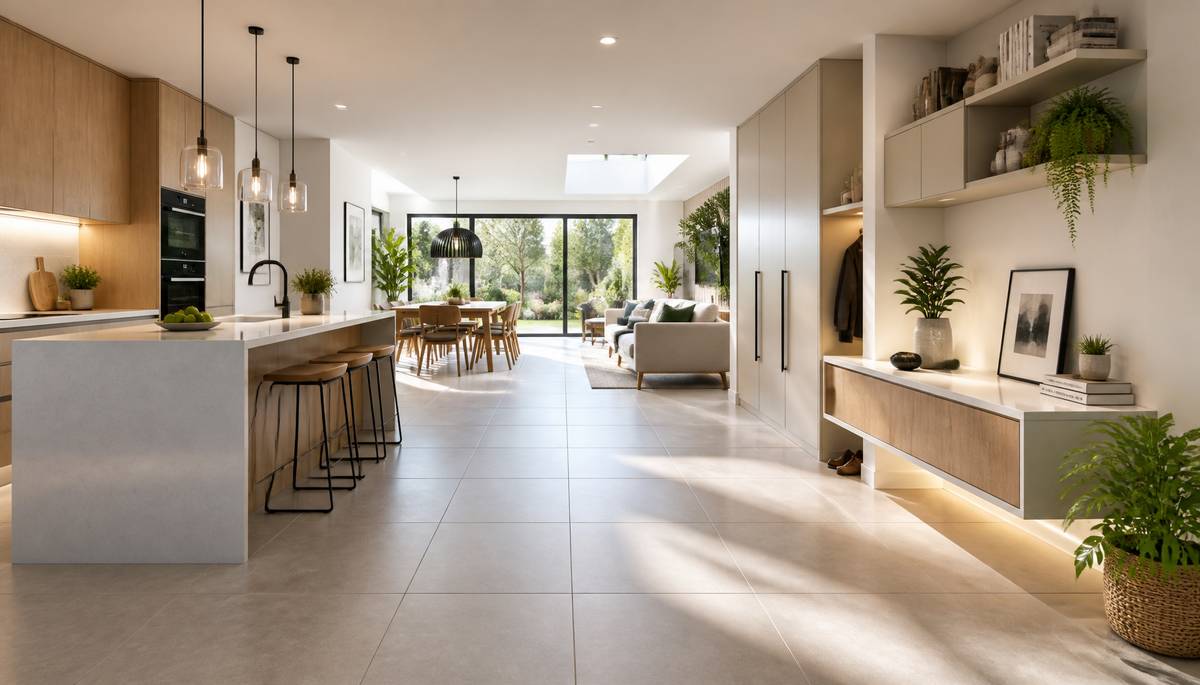
Seamless or low-joint flooring can make a huge difference. Every groove, grout line, threshold, and material transition gives dust, crumbs, pet hair, and general household mystery particles somewhere to settle. Smooth flooring across larger areas is quicker to sweep, vacuum, and mop because the cleaning route is simple.
Large-format tiles, polished concrete, resin flooring, luxury vinyl, or engineered wood with minimal bevels can all reduce the number of dirt traps underfoot. This does not mean every home needs to resemble a minimalist gallery where even the fruit bowl looks nervous. It simply means fewer interruptions in the floor surface usually equals less cleaning time.
In kitchens and bathrooms, grout choice matters. Pale grout may look crisp on installation day, then begin its slow emotional decline after several months of splashes, steam, and people who “definitely wiped that up.” Choosing darker grout, stain-resistant grout, or larger tiles can keep the space looking cleaner for longer.
Lift Furniture Off the Floor Where Possible
Wall-mounted furniture is one of the quiet heroes of easy-clean design. Floating vanities, wall-hung toilets, mounted cabinets, and raised storage units allow floors to be cleaned in smooth, uninterrupted movements. No more trying to angle a vacuum nozzle into a gap clearly designed by someone with tiny robot arms.
This is especially useful in bathrooms, utility rooms, hallways, and compact bedrooms. When furniture touches the floor on every side, dust collects around the base. When furniture floats, the floor remains visible and accessible. That single decision can turn a fiddly cleaning job into a quick sweep.
Wall-mounted pieces also make rooms feel lighter and more spacious, which is a pleasant bonus. Less visual clutter often means less actual clutter, too, because exposed floor space tends to discourage the slow migration of random objects. Shoes, bags, cables, and unidentified plastic bits have fewer shadowy corners in which to establish a colony.
Integrated Storage Helps Clutter Stay Out of Sight
Cleaning is rarely slowed down by dirt alone. Clutter often steals far more time than dust ever could. Every ornament that needs lifting, every basket that must be moved, and every pile of "I'll sort that tomorrow" paperwork creates another obstacle between you and a clean room.
Built-in storage allows everyday items to disappear quickly without feeling hidden forever. Full-height cupboards, fitted wardrobes, under-stair storage, window-seat compartments, and integrated shelving provide designated homes for belongings that might otherwise occupy worktops and tables.
A renovation offers the perfect opportunity to create storage around the way people actually live instead of how glossy magazines imagine they live. If children's toys always end up in the living room, build storage there. If coats naturally accumulate near the entrance, include generous hallway cupboards. Fighting habits is exhausting. Designing around them is far more effective.
Easy-Clean Surfaces Earn Their Keep Every Day
Material selection has a direct impact on maintenance. Some finishes seem determined to preserve every fingerprint, water mark, and coffee splash as if they are historical artefacts. Others require little more than a quick wipe before looking fresh again.
During a renovation, it is worth considering finishes that balance appearance with practicality. Popular examples include:
- Quartz worktops that resist staining.
- Matt finishes that disguise fingerprints better than high gloss.
- Washable paint for busy hallways and family rooms.
- Glass splashbacks with minimal joints.
- Cabinet doors featuring simple, flat profiles rather than intricate detailing.
Decorative grooves, ornate mouldings, and elaborate handles may look attractive initially, but every ridge becomes another place where dust quietly settles. Simpler profiles usually stay cleaner with much less effort.
Simpler Layouts Mean Faster Cleaning Routes
An efficient layout benefits far more than everyday movement. It also improves the cleaning process itself.
Open circulation routes allow vacuum cleaners and mops to move naturally from room to room without constant repositioning. Wide walkways, sensible furniture placement, and fewer unnecessary partitions reduce awkward corners where dirt tends to gather unnoticed.
This does not mean every home should become completely open plan. Well-defined rooms often provide comfort and practicality. The goal is simply to eliminate unnecessary obstacles that complicate both living and maintaining the space.
Even kitchen design can contribute. Leaving sufficient clearance around islands, avoiding narrow dead-end walkways, and ensuring appliances are easy to access makes routine cleaning considerably less frustrating.
Dust Less Live More
Successful renovations are measured by much more than impressive photographs taken on completion day. Their real value appears months and years later, when everyday life settles into its normal rhythm.
Choosing seamless flooring, floating furniture, integrated storage, practical finishes, and straightforward layouts creates a home that quietly supports its occupants instead of demanding constant attention. Cleaning becomes quicker, surfaces stay presentable for longer, and weekends become available for activities more enjoyable than chasing dust around the skirting boards.
Few people ever stand in a newly renovated home and announce their excitement about spending less time vacuuming. Yet once those thoughtful design decisions begin paying off, that may turn out to be one of the most satisfying improvements of all. After all, the cleanest trick a renovation can perform is making the cleaning itself almost disappear.
|
|