How to Spot the Earliest Signs of a Pest Problem Before It Becomes an Expensive One
 Some household mysteries deserve to stay unsolved. The missing television remote is one. The single sock that vanished in the wash is another. Strange scratching behind the wall at two in the morning, however, is a mystery worth investigating sooner rather than later.
Pests rarely burst through the front door waving little flags to announce their arrival. Most infestations begin quietly, with subtle clues that are easy to dismiss as ordinary household quirks. Unfortunately, those tiny hints often become much larger and far more expensive problems if ignored. Learning to recognise the earliest warning signs can help you deal with an issue before it develops into damaged property, contaminated food, or costly repairs.
Unusual Smells That Weren't There Before
One of the first signs of hidden pest activity is often an unfamiliar smell. Different pests leave behind different odours, and while nobody expects their home to smell like fresh mountain air every day, new persistent scents deserve attention.
Rodents can produce a strong musky smell, especially when populations begin to grow in enclosed spaces such as lofts, wall cavities, or under floorboards. Cockroaches may create an oily, musty odour that becomes more noticeable over time, while dead pests trapped inside walls can produce an unmistakable unpleasant smell that tends to linger.
If cleaning the room thoroughly doesn't remove the odour, it may be time to investigate rather than simply reaching for another air freshener. Air fresheners are remarkably optimistic, but they rarely solve structural problems involving wildlife.
Listen When the House Starts Talking
Homes naturally make noises. Pipes expand, timber creaks, and roofs shift with changing temperatures. What deserves attention are repetitive scratching, scurrying, or gnawing sounds, particularly after dark.
Rodents are usually most active during the evening and night. You may hear movement above ceilings, inside walls, or beneath floors. Birds nesting in roof spaces can also create regular fluttering and scratching noises during daylight hours.
Occasional sounds may not indicate a serious issue, but noises that become more frequent or seem to come from the same location should not be ignored.
Small Droppings Often Point to Bigger Problems
Finding droppings is rarely anybody's favourite discovery during household cleaning, but they are one of the clearest indicators that pests are already present.
Different pests leave droppings of different shapes and sizes, making their appearance useful in identifying what may be living nearby. Fresh droppings suggest recent activity, while repeated discoveries in the same location often indicate that pests are regularly travelling through that area.
Common places to check include:
- Behind kitchen appliances
- Inside cupboards and pantries
- Loft spaces
- Garages and sheds
- Under sinks and utility rooms
Rather than simply cleaning them away and hoping for the best, try to determine where they are coming from. Otherwise, tomorrow's cleaning session may feel suspiciously familiar.
Food Packaging Doesn't Damage Itself
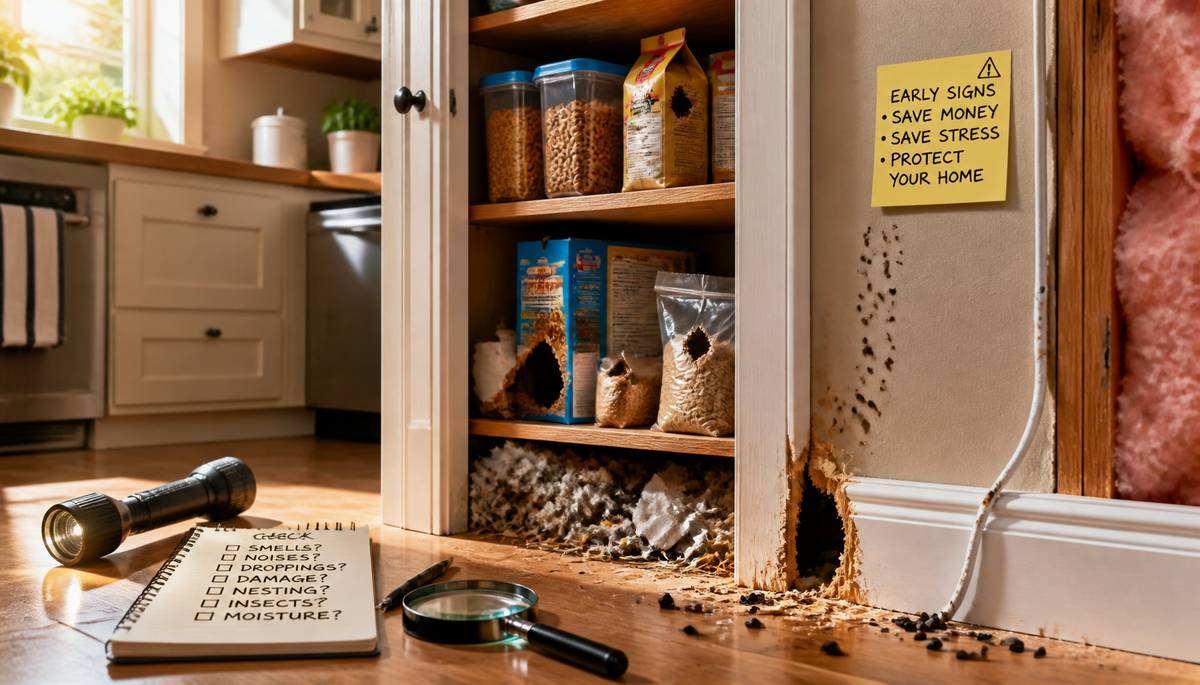
A torn cereal box or chewed bag of flour can easily be blamed on rough handling, particularly if several people share the kitchen. However, repeated damage to food packaging often tells a different story.
Rodents are excellent at chewing through cardboard, paper, and even some plastics in search of food. Insects can also find their way into dry goods, leaving tiny holes, webbing, or fine particles around stored products.
Regularly inspecting food cupboards takes only a few minutes but can reveal problems while they are still relatively small. Well-sealed containers also make kitchens far less inviting to hungry visitors.
Nesting Materials Can Appear Almost Anywhere
Pests rarely move in without redecorating.
Rodents, in particular, gather whatever soft materials they can find to create comfortable nesting areas. Shredded paper, insulation, fabric fibres, dried leaves, pet hair, and even bits of cardboard can all end up forming cosy little homes tucked away behind appliances, inside loft insulation, beneath decking, or in rarely visited storage areas.
You may also notice piles of material appearing where they have no obvious purpose. A few scraps of newspaper hidden behind boxes in the garage might not seem significant at first glance, but when combined with droppings or scratching noises, they become part of a much clearer picture.
Checking seldom-used areas every few months helps catch these early signs before several generations decide your property has become a five-star resort.
Unexpected Insect Activity Deserves Attention
Seeing a single insect indoors is perfectly normal. Seeing the same type repeatedly in specific locations is another matter altogether.
Ants often establish predictable trails leading to food sources. Cockroaches generally avoid light, so spotting one during the day may suggest a larger hidden population nearby. Flying insects appearing around windows outside their usual season can indicate breeding activity within the property, while clusters of tiny insects near stored food may point to pantry pests.
Pay attention to where insects appear rather than simply removing them. Patterns often reveal entry points, nesting sites, or conditions that are encouraging them to stay.
Look for Damage Beyond the Obvious
Some of the earliest pest damage is surprisingly easy to overlook because it develops gradually.
Inspect wooden skirting boards, electrical cables, insulation, stored belongings, and even furniture for signs of chewing, scratching, or unusual wear. Tiny holes in timber, frayed wiring, or damaged insulation may seem minor individually, but together they can indicate ongoing activity.
Regular inspections are particularly worthwhile in lofts, basements, garages, and storage cupboards where damage can remain unnoticed for months.
Moisture Can Invite Unwanted Guests
Many pests are attracted to damp conditions just as much as they are to food.
Leaking pipes, condensation, blocked gutters, and poorly ventilated spaces create ideal environments for insects and other unwanted visitors. Even a slow drip beneath a sink can provide enough moisture to support certain pest populations over time.
Addressing water issues promptly not only protects the structure of your home but also removes one of the factors that encourages pests to settle in.
Trust Changes in Routine
Perhaps the most overlooked warning sign is simply noticing that something feels different.
Maybe the dog keeps staring behind the washing machine. Perhaps food disappears a little faster than expected, or tiny black specks appear on the worktop every morning despite cleaning it the night before. Individual clues can seem insignificant, but together they often point towards an issue developing behind the scenes.
Being familiar with your home's normal appearance and routine makes unusual changes much easier to spot.
Don't Let Pests Check In Permanently
Early detection is almost always less expensive than dealing with a well-established infestation. Small warning signs rarely solve themselves, and waiting often gives pests more time to breed, spread, and cause damage that extends far beyond the original problem.
By paying attention to unusual smells, unfamiliar noises, damaged food packaging, droppings, nesting materials, insect activity, and subtle property damage, homeowners can often intervene before repairs become costly or stressful. A little curiosity today may prevent a much larger headache tomorrow, leaving your home occupied only by the residents who actually pay the mortgage.
|
|