thecleaningdirectory
A comprehensive website review service for businesses in the cleaning industry
★ Get your own unique FAQ + Selling Points on your profile page
★ be seen by 1000s of daily visitors and win new business
thecleaningdirectory.com Miniblog
Why Does An Old Toothbrush Clean What Sponges Never Touch?
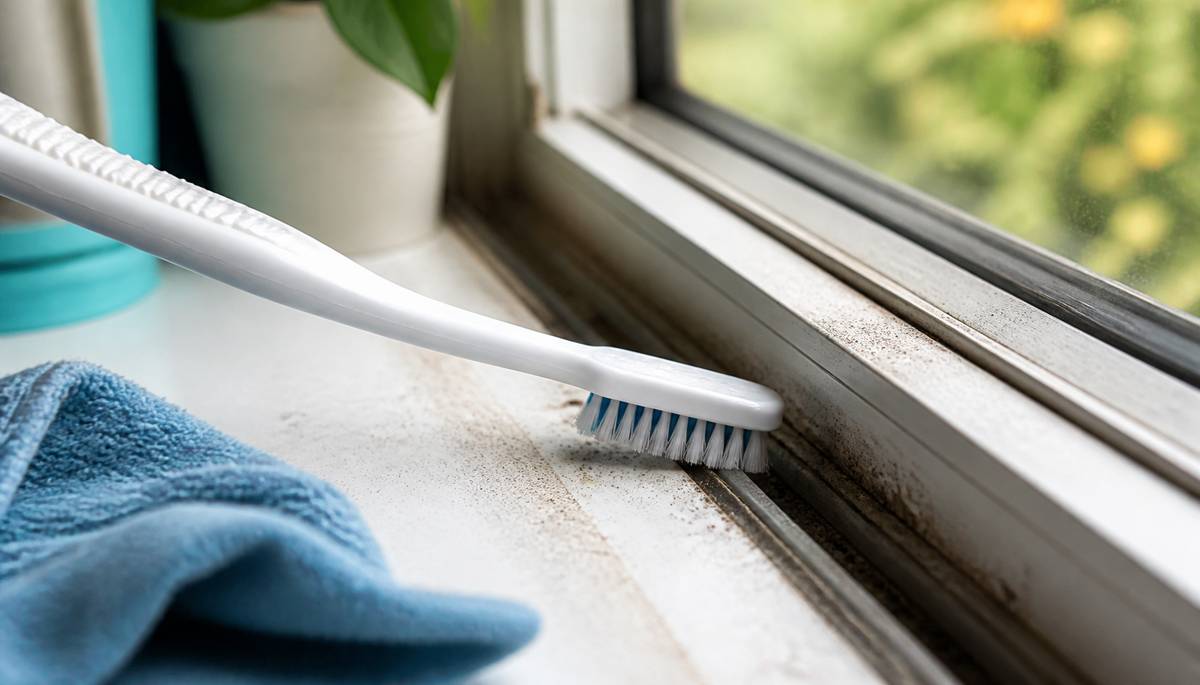 An old toothbrush is the household equivalent of that tiny woman in a heist film who can slip through the air vent while everyone else is still wrestling the front door.
Its brilliance is not mystical. It’s small. That’s it. Sponges and cloths are fine for broad, obvious muck, but they’re hopeless at the grubby little borderlands of a home: the ring around a tap base, the crease behind a handle, the skinny line where grime settles and gets ideas above its station.
In the bathroom, a retired toothbrush is ideal for working cleaner around taps, fittings and those awkward corners where soap scum and limescale like to loaf about. It’s also excellent on grout and along tile edges, where a full-size brush can feel clumsy and vague.
Elsewhere, window tracks collect a truly offensive mix of dust, dead insects and that strange grey fluff no one can identify. A dry brush loosens it nicely before the vacuum gets involved; a damp one helps with the more stubborn bits.
In the kitchen, it earns its keep around cooker edges, sink fittings, fridge seals, and the fiddly territory around buttons, knobs and handles where grease and crumbs quietly gather.
Keep a few old toothbrushes back for different jobs, and label them if you must. No one wants the grout brush making an unscheduled return to anyone’s mouth.
Posted on 6 October 2026
The Best Cleaning Shortcut Is Doing It Immediately
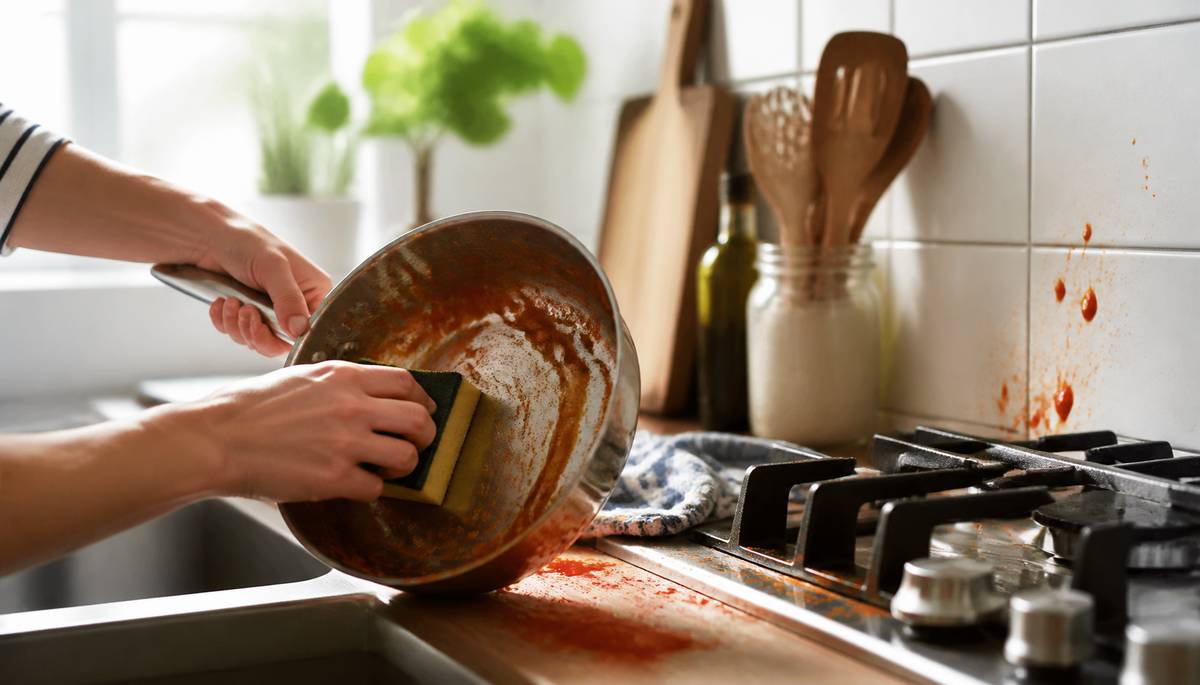 The smartest cleaning habit isn’t a fancy spray or a viral organiser’s trick. It’s catching the mess before it settles in and starts making plans.
A pan with fresh sauce on it is annoying. A pan left till morning is a sulky little ruin. If you let it cool enough to handle, then soak or wash it straight away, you skip the grim scrubbing session later. The same goes for hobs, worktops and splashbacks: today’s splatter is tomorrow’s glued-on grease, usually with a bonus layer of dust.
Spills are even more unforgiving. A drink knocked onto carpet or a blob of food on upholstery has a brief, merciful window where blotting it quickly can stop a stain taking up permanent residence. The right method depends on the fabric or surface, obviously, but speed helps almost every time.
Bathrooms work on the same logic. A quick wipe or squeegee over the shower screen after you’re done removes water before soap scum and mineral marks build up. It takes seconds and saves you from that bleak future encounter with a bottle of limescale remover.
This isn’t about stalking your own home with a cloth in hand, twitching. It’s about spotting the tiny jobs where half a minute now saves ten minutes later. Especially if tomato sauce has just hit something pale and expensive.
Posted on 27 September 2026
Why Does Your Cleaning Cloth Make Everything Dirtier?
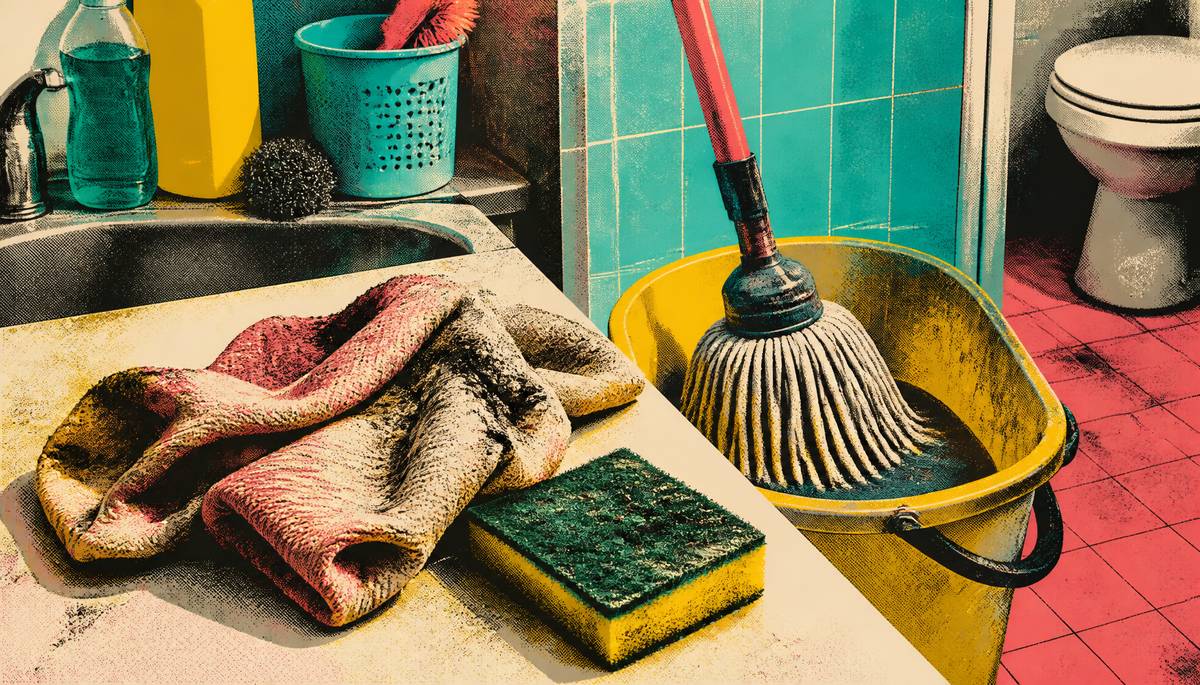 A dirty cloth has the social grace of a gossip: it never keeps anything to itself. You wipe a surface, admire your virtue, and yet the grease, dust and faint stickiness remain. Why? Because the cloth has ceased to clean and begun to commute the dirt from one place to another.
Cleaning cloths can hold only so much. Once loaded with grime, they stop lifting it and start smearing it about with the confidence of a bad decorator. Fold the cloth into sections and turn to a fresh side often. It is a small habit with surprisingly large consequences.
The mop suffers from the same moral weakness. If it is repeatedly plunged into murky water, your floor is not being washed so much as given a thin glaze of diluted filth. Change the water when it looks dirty, or use a system that keeps clean and dirty water apart.
Then there is the kitchen sponge, that damp little opportunist lurking by the sink. It meets grease, food residue and moisture all day, yet often survives far beyond its dignity. Clean it regularly, replace it promptly, and do not ignore unpleasant smells or visible wear.
One more rule deserves to be engraved in every cupboard: keep separate cloths for separate places. A cloth that has paid a visit to the toilet should not be promoted to the kitchen worktop.
Often, the reason nothing feels truly clean is beautifully simple. Your cleaning tool is already filthy.
Posted on 22 September 2026
How Did A Sponge Holder Explode To 1,000 Sales In Three Weeks?
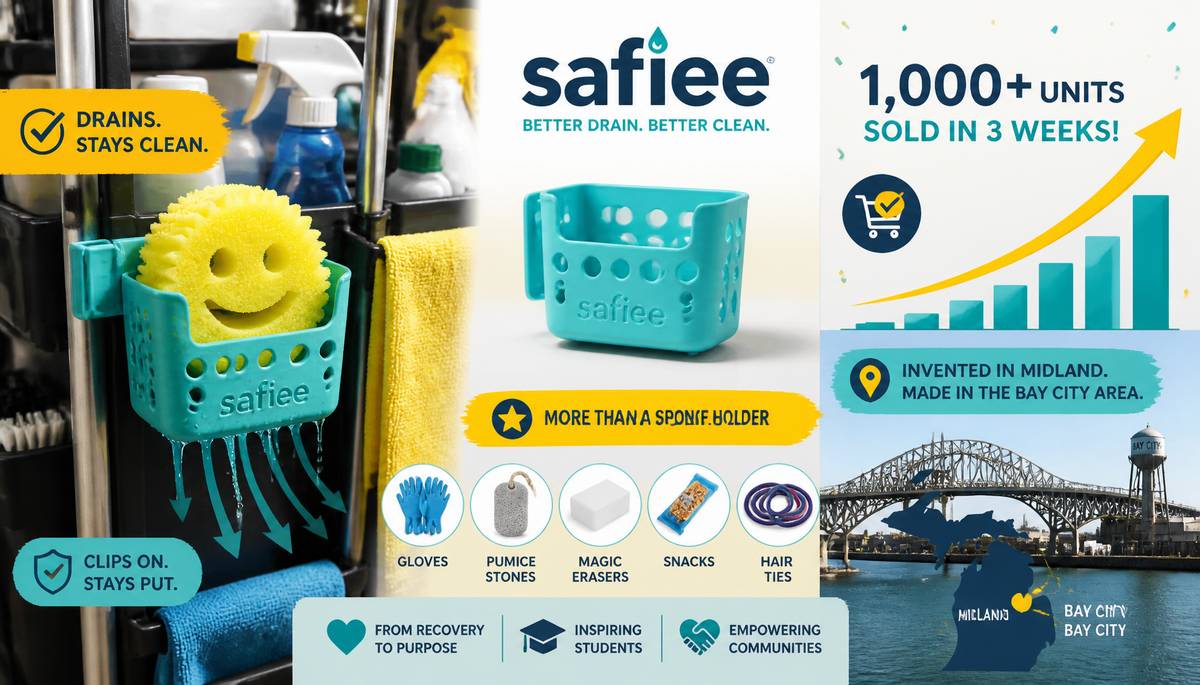 A sponge holder selling 1,000 units in three weeks sounds faintly absurd, which is usually a sign someone has solved a very real, very boring problem better than everyone else.
That’s what happened with Safiee, a ventilated plastic holder created by Midland inventor Carrie Everett. Designed to clip onto a cleaning rig, it gives damp tools such as Scrub Daddy-style sponges a separate place to drain instead of stewing among the rest of a cleaner’s kit. Practical beats glamorous. Often by a mile.
Safiee launched on 22 August with an event at the Central Michigan University Research Corp. in Midland. Everett says sales passed 1,000 units in the first three weeks, helped by an online cleaning audience that had already watched the product take shape. That audience matters. Two years of prototyping, patent work, testing and local manufacturing created more than a product; it created anticipation.
Everett, who owns C&A Servicez, is now trying to turn launch buzz into steady demand through ads, live TikTok demonstrations and direct sales via safiee.com and TikTok Shop. She also sees a wider market: the holder can store gloves, pumice stones, Magic Erasers, snacks or hair ties. Strange? Slightly. Useful? Also yes.
There’s a local angle too. Safiee was invented in Midland and is manufactured in the Bay City area. For Everett, who has spoken openly about recovery and now visits schools and inmates to talk about entrepreneurship, that makes the milestone feel bigger than a single product drop.
Posted on 18 September 2026
How An Eyebrow Artist Built A 240,000-Follower Empire On Scrubbing Toilets
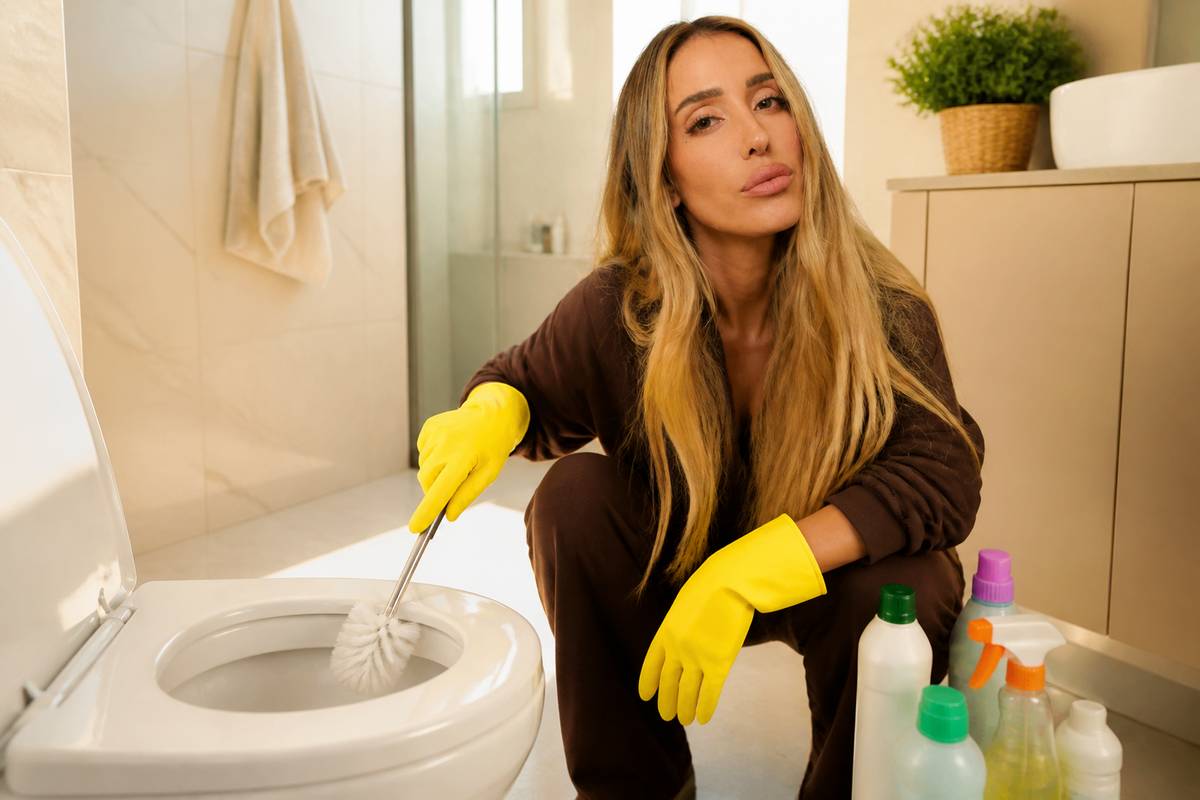 Most people scrub a toilet because they must. Dolev Cohen turned it into a following of 240,000.
Cohen, 33, lives in Ashkelon with her husband, Adir, and their four children. Her main income comes from designing eyebrows, but online she is known for something less glamorous and more revealing: an almost devotional commitment to cleanliness. She films, explains and demonstrates how she keeps a busy family home immaculate without hiring a cleaner.
The ritual centres on Wednesday, a day she has adored since childhood. Her parents were both exacting about order, and she inherited the habit. For Cohen, the weekly reset starts on Tuesday night with the shopping, the kitchen and the fridge. By Wednesday morning, after the school and nursery drop-off, she begins the real work: rooms emptied, surfaces stripped back, screens removed, patio washed, pergola rinsed, even the lobby and garden attended to.
Bathrooms matter most. The kitchen too. In her version of domestic reality, nothing is too small to clean, not even the car. She describes it as therapy rather than drudgery, and says the smell of bleach on her hands is its own reward.
She also paints the house herself once a month and handles repairs, leaving little for her husband to fix. That, more than the follower count, explains the appeal: competence made oddly magnetic.
Posted on 13 September 2026
The Torch Trick That Exposes Dust Your Ceiling Lights Hide
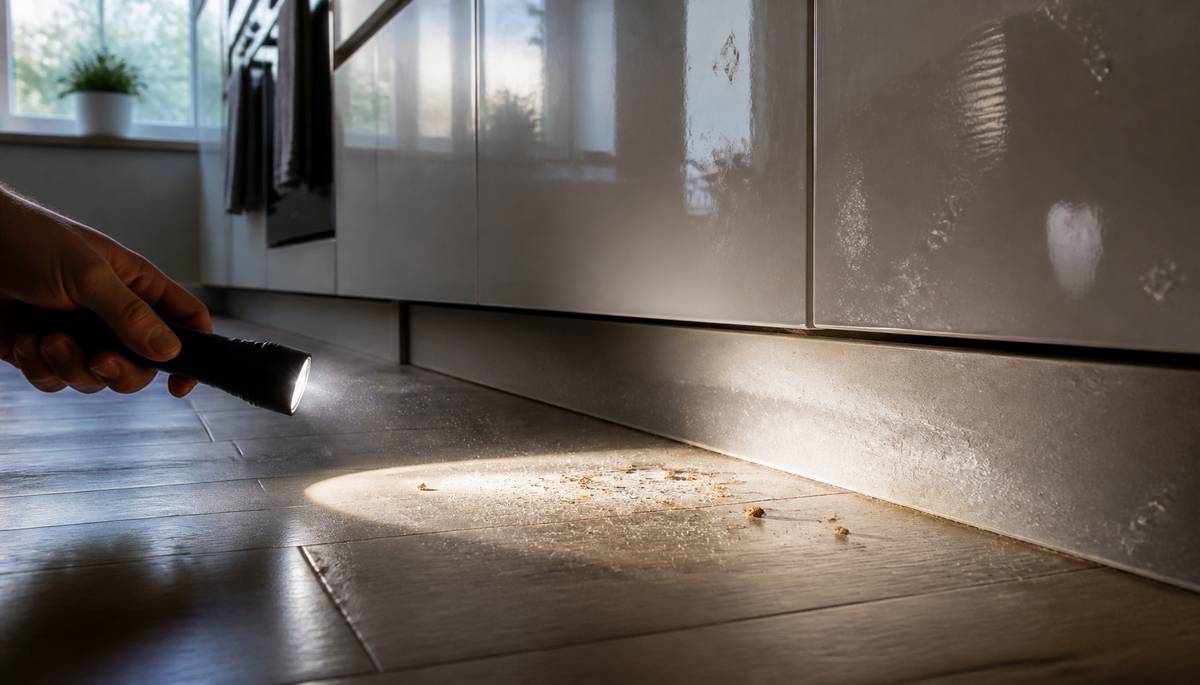 A room can look blameless under ceiling lights, then suddenly confess everything when light hits it from the side. That is the trick. Take a torch, hold it low, and sweep the beam across a surface rather than straight at it. Instantly, dust, crumbs, streaks and smears start auditioning for the lead role.
The reason is simple enough: low, sideways light throws tiny shadows. Particles that vanish on a pale shelf or floor become sharply visible. Pet hair does too, especially on hard flooring or sofas where the colour match has been working in its favour like a dubious alibi.
It is particularly revealing on glass, mirrors and glossy kitchen cupboards. Fingerprints appear. Dried droplets announce themselves. That cloth pass you felt rather pleased with may turn out to have left streaks behind. Better to know, if only briefly.
The torch also exposes the places cleaning tends to skip past in a hurry: along skirting boards, under furniture, and in the awkward corners near appliances where dust settles down and signs a lease.
You do not need to patrol the house like a detective with trust issues. Used now and then, or for checking a specific area after cleaning, it is brilliantly practical. Just be warned: once you have seen what ordinary ceiling lights politely overlook, you may never quite trust a room that looks “clean” again.
Posted on 5 September 2026
Price Barely Matters: Why Reputation Is Crushing Discounts In Facility Cleaning
 Discounts still get attention. Reputation gets the contract.
The latest BSC benchmark numbers make that painfully clear. While 85% of contractors expect higher revenue in 2026, and 67% of that group expect growth of at least 6%, only 26% say price is what sets them apart. A huge 92% point to experience and reputation instead. That tells you something: buyers may ask about cost, but they sign for confidence.
And they’re shopping around. Seventy-one per cent of new accounts come from taking over from another contractor, not from replacing in-house teams. Commercial offices and property managers are the biggest targets for growth at 61%, followed by healthcare at 38% and government at 30%. So the market is moving, but mostly by switching hands.
Clients are not just chasing the cheapest mop in the cupboard. Their strongest concerns are health, safety and security at 54%, then facility image at 51%. Cutting cleaning costs matters, but it trails at 43%. That gap matters.
The catch? Contractors still have to deliver. Three-quarters say recruiting qualified cleaners is their biggest labour problem. Most plan to hire, and labour already eats more than 60% of operating costs for many firms. So yes, price matters. Just not as much as trust, competence and showing up without creating a fresh disaster in the loos, still ranked the biggest problem area.
Posted on 31 August 2026
The Back of Your TV Is Probably Dirtier Than You Think-and It Matters
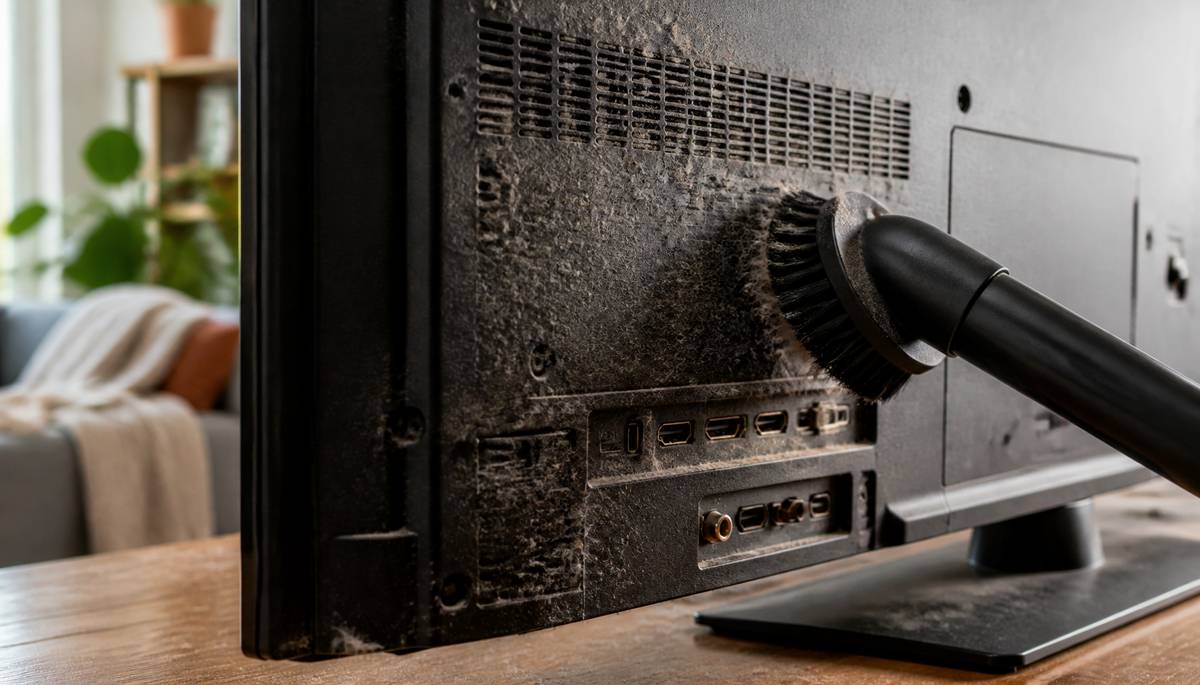 You clean the screen because fingerprints are rude. Fair enough. But the back of the telly? That’s where the real filth is hiding, quietly plotting against your electronics.
Dust and pet hair collect around the vents, and those vents are how your TV dumps heat. Block them up and the set can overheat, strain itself and, over time, wear out faster. Lovely. Dust can also creep into HDMI and USB ports, which may lead to picture glitches or sound problems. So yes, that fuzzy screen might not be “atmosphere”. It might just be muck.
A cleaning pro recommends tackling the back every six months, and more often if you keep windows open a lot or you’ve had building work done. If your TV is wall-mounted, clean the mount too. It’s basically a shelf for grime.
Do it properly. Switch the TV off, unplug it, pull it away from the wall and let it cool if needed. Start with a dry microfibre cloth or a vacuum with a brush attachment to lift loose dust, especially around the vents. Then wipe the back with a barely damp cloth with a little soapy water, working methodically from top to bottom. Dry it thoroughly with a clean cloth before plugging it back in.
And please, for the love of circuitry, never spray cleaner directly onto the back. That’s how you turn housekeeping into regret.
Posted on 24 August 2026
Stolen Picasso Print Found By Landlord While Cleaning Apartment
 A signed Picasso vanished from a Milwaukee gallery in 2018 and, for years, looked like it had slipped clean out of reach. Instead, it spent that time sitting in plain sight in a rented flat, coated in dust, until a landlord clearing out an evicted tenant’s belongings spotted something odd on the wall.
The work was Torero, a Picasso print signed by the artist and one of only 30 known examples. Landlord Tim Dertz said it was hanging in an unusual spot and looked as if nobody had paid it any mind for ages. An antiques dealer friend clocked what it might be and linked it to the piece reported stolen from Bill DeLind’s gallery. Dertz then passed it to police.
For DeLind, the call was a shock. He recognised it at once, helped by the sticker from his appraisal business still fixed to the back of the frame, exactly where it had been before the theft. He said he was overwhelmed and struggled to find words.
At the time it disappeared, the print was valued at roughly $35,000 to $50,000. DeLind believes it is still around that mark, perhaps nudging the higher end because of its strange history. Milwaukee police are still investigating, although the usual statute of limitations for theft and property offences is six years. For DeLind, the recovery also carries a personal note: his former business partner, who died in February, never stopped hoping it would turn up.
Posted on 17 August 2026
Why Your Disinfectant Spray May Be Doing Absolutely Nothing
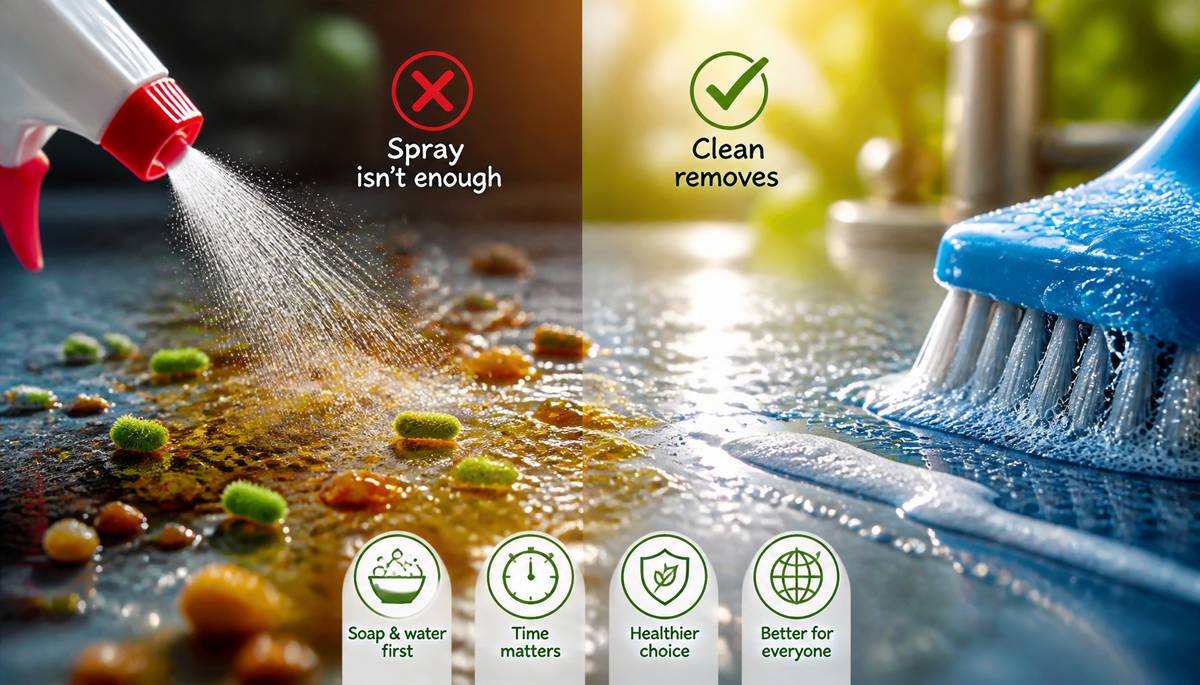 Your disinfectant spray may be offering more comfort than protection. If a surface is still smeared with grease, food residue or the unpleasant remains of raw chicken, the chemical cannot properly reach the microbes beneath. Spraying and wiping at once is scarcely better; most disinfectants must stay visibly wet for anywhere from one to ten minutes, or they do very nearly nothing at all.
For ordinary spills, soap and water are usually enough. A proper scrub loosens the grip that bacteria and viruses have on a surface, and rinsing carries them away. That is often all a kitchen floor after a baby’s supper, or a frequently touched doorknob, truly requires. Disinfectants are more sensible after preparing raw meat or when someone in the house is contagious.
This distinction matters, because many common disinfectants contain quaternary ammonium compounds, or QACs. These chemicals are widely used, yet studies have linked them to concerns involving inflammation, the lungs, the immune system, fertility, developing brains and the environment. Overuse may also contribute to antimicrobial resistance.
If you do need to disinfect, less toxic options exist. Products based on alcohol, hydrogen peroxide, citric acid or lactic acid can work well, provided you follow the label. Seventy per cent alcohol needs about a minute; standard 3% hydrogen peroxide, about five. Sensible cleaning, it appears, is often more effective than dramatic spraying.
Posted on 12 August 2026
Why Do Human Cleaners Make Airports Feel Safer Than Robots Ever Could?
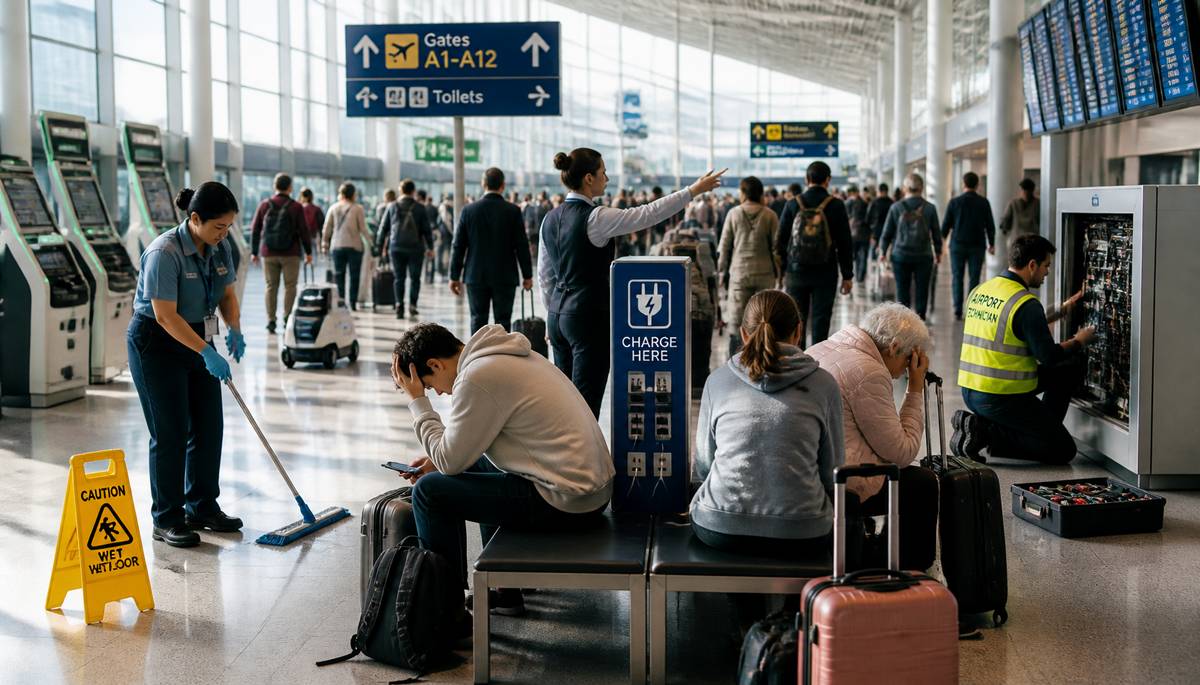 Airports are full of people pretending they’re fine while quietly unravelling near a charging point. So yes, efficiency matters. But so does the feeling that someone sensible is nearby.
That is why human cleaners and visible staff do more than polish floors or check equipment. They signal care. A person mopping a spill, walking the terminal or fixing a broken gate tells passengers, almost subconsciously, that the place is being watched over. That matters in buildings used by millions of tired, stressed and occasionally baffled people.
Robots can scrub floors and carry out routine tasks. Fine. But they cannot help a lost child, clock that an older passenger is struggling with a bag, or answer a panicked question with a calm face and a bit of patience. Airports are not factories. They are emotional ecosystems with luggage belts.
There is also a gap between the sales pitch and the likely outcome. Companies often say automation frees staff for “higher-value” work. Sometimes it does. Quite often, once the machines prove dependable, jobs quietly disappear and “innovation” turns out to mean cost-cutting with better branding.
And then there is the atmosphere. A terminal crowded with robotic dogs, self-service kiosks and autonomous machines may impress some travellers. Others will find it bleak, impersonal and faintly dystopian.
Technology should support airport workers, especially in risky or safety-critical jobs. It should not erase the humans who make the place feel safe.
Posted on 3 August 2026
The Dirtiest Secret In Short-Term Rentals: Cleaning Fails First At Scale
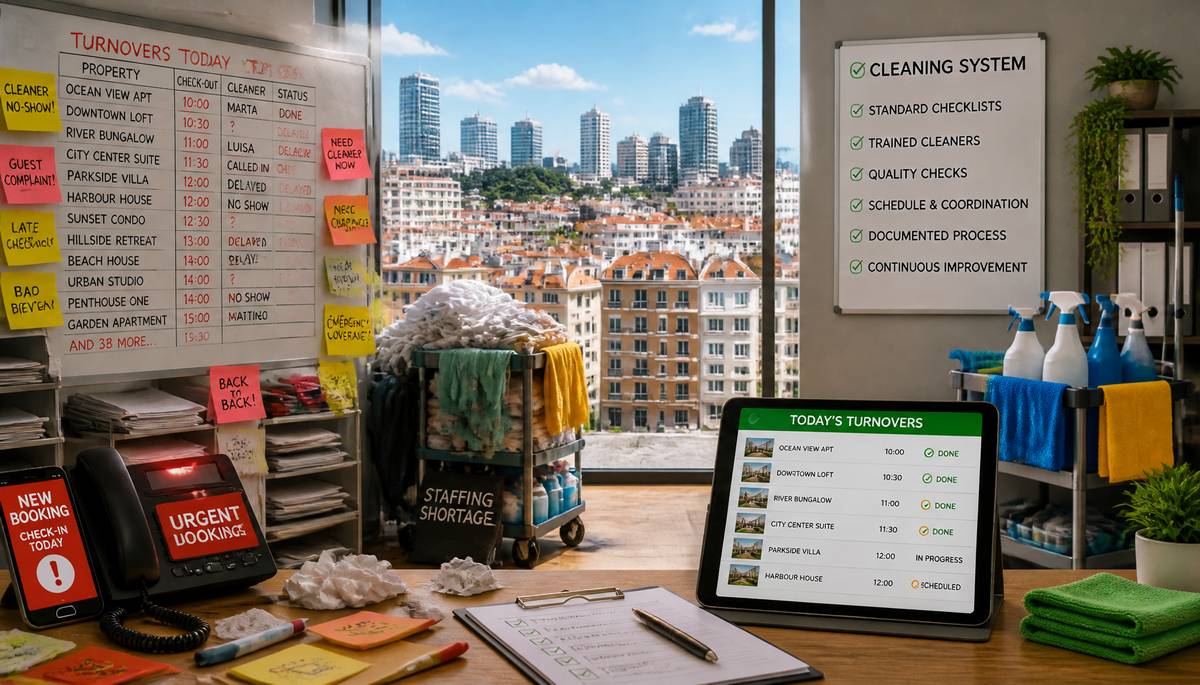 Scale is where the glitter falls off. One flat, one cleaner, one checklist taped to the fridge? Manageable. Fifty properties across a city with same-day turnarounds? That’s where cleaning stops being a task and starts behaving like a fault line.
The warning lights are already flashing. Hospitable’s late-2025 survey of 554 hosts and managers found more than a third lost bookings or picked up poor reviews because of staffing or contractor problems. Nearly 40% said dependable local cleaners were hard to find, and the strain worsened as portfolios grew. Key Data’s 2026 industry outlook, based on 244 US managers covering 43,000-plus properties, found 73% saw operations and staffing as an immediate constraint.
Cleaning gets hit first because it’s rigid, physical and brutally time-sensitive. You can’t postpone a missed turnover. Doinn’s data shows mid-stay cleans make up only 3–4% of volume in key European markets, so most work is crammed into narrow changeover windows. No slack. No jazz.
The deeper mess is structural. Standards often live in someone’s memory, not in a system. So every new hire means repeat explanations, extra checks and quality wobble. Higher pay helps, but not reliably; average cleaning prices range from about €26 in Portugal and Italy to roughly €97 in the Netherlands. Labour is scarce, not just cheap.
2026 won’t reward managers who simply hire harder. It will favour those who turn cleaning into process, documentation, training and coordination that survives human churn.
Posted on 29 July 2026
The Real Reason To Clean Your Freezer Isn't Hygiene
 Your freezer isn’t a crime scene. It’s a holding pen. Most of the time, frozen food isn’t dangerous if it went in promptly and in airtight packaging, because bacteria need available water and freezing locks that up.
So the real reason to clean your freezer is simpler, and less dramatic: quality and efficiency.
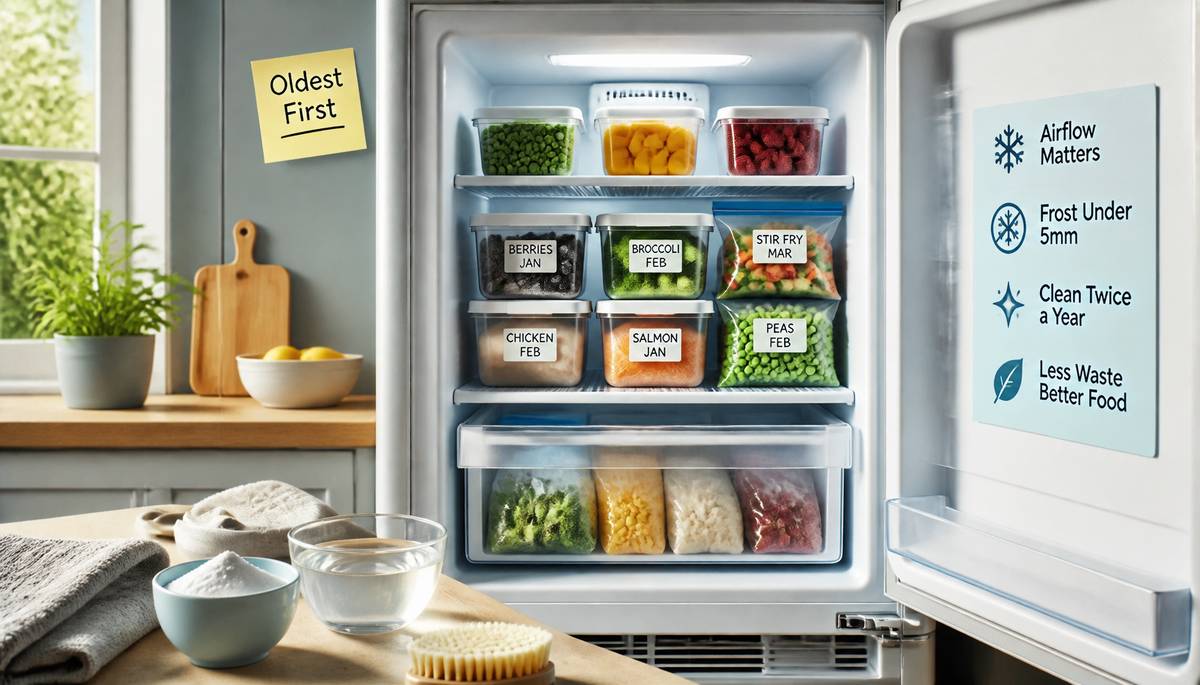
Frozen food doesn’t stay at its best forever. Home freezers chill food slowly, which means bigger ice crystals and more damage to texture, especially in water-rich foods like fruit and veg. Fatty or protein-rich foods tend to cope better. If you don’t keep track, the back of the drawer becomes a graveyard of limp broccoli and mystery leftovers. Date things. Use the oldest first.
Then there’s airflow. Freezers make cold air at the back and move it around. Pack the shelves too tightly and that circulation stalls. Food near the front can soften, and the machine has to work harder.
A deep clean once or twice a year is usually enough, with lighter checks every few months. Frost should stay under about 5mm. More than that, and efficiency drops. Defrost by switching the unit off and using bowls of hot water, not knives. Clean with bicarb and water, dry it well, wash the seals, check for splits, and vacuum dust from the condenser behind or underneath every six months.
Clean freezer, better food, less strain, lower waste.
Posted on 24 July 2026
The Musty Smell That Exposes Mould Before You Ever See It
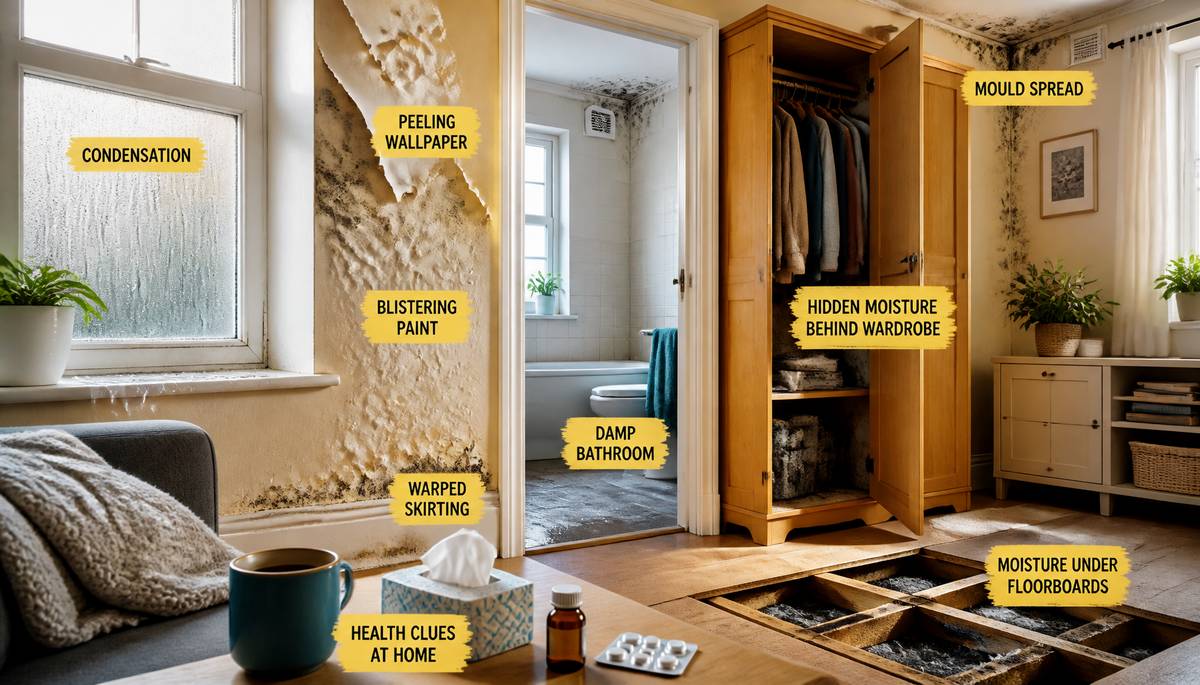 That stale, damp pong in a room is often mould’s opening act. Long before it decorates the wall like a miserable art project, excess moisture can be brewing behind wardrobes, under floors, inside cupboards or tucked away in wall cavities.
Smell is usually the first clue, but it rarely travels alone. Wallpaper that starts peeling for no obvious reason, paint that blisters, skirting boards that warp, or odd stains on walls and ceilings can all hint at moisture trapped beneath the surface. That dampness gives mould exactly what it wants: time, still air and somewhere to spread quietly.
Condensation is another one people shrug off a bit too easily. A foggy window in winter is normal enough. Streams of water, day after day, in bathrooms, kitchens or stuffy bedrooms is not. Poor ventilation and high humidity can turn those rooms into a luxury spa for mould.
Sometimes the warning sign is you. Sneezing, coughing, itchy eyes or a blocked nose that seems worse at home may have plenty of causes, but hidden mould is one worth checking.
Small patches caused by condensation can often be cleaned with the right product, provided you sort the moisture issue too. If it keeps coming back, covers a large area, follows a leak or flood, or seems to be lurking behind walls or flooring, get professional advice early.
Posted on 15 July 2026
A Dirty Hotel Room Can Derail A World Cup Campaign
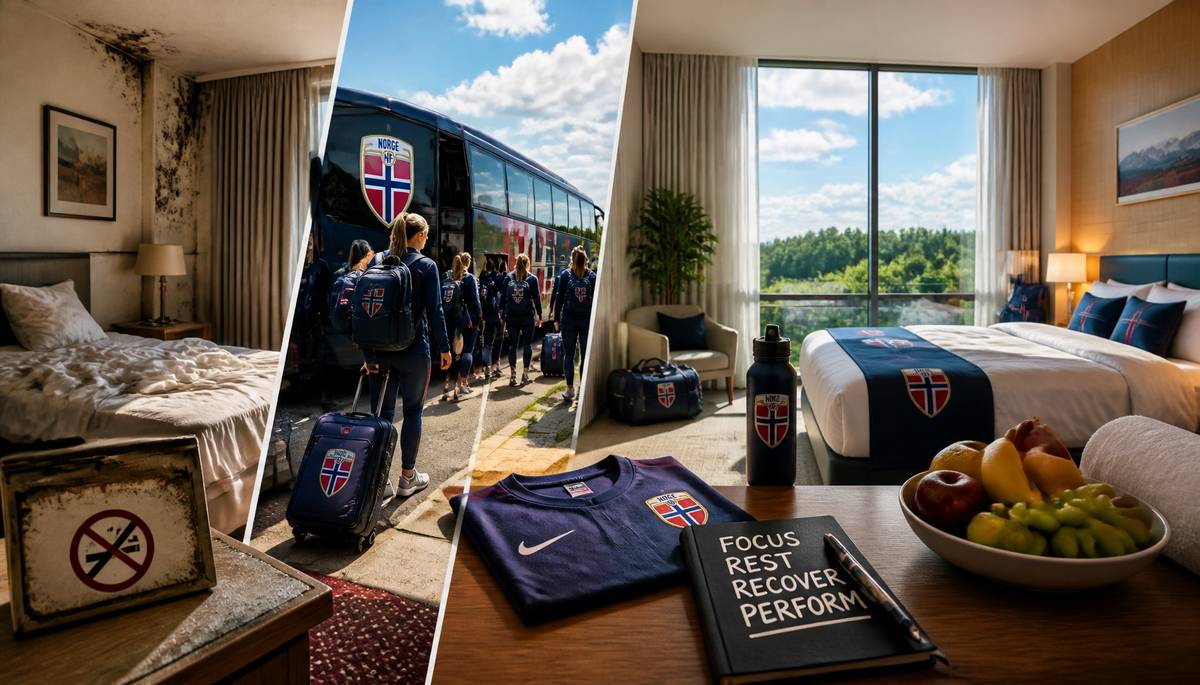 A World Cup campaign can be nudged off course by something as ordinary, and as maddening, as a bad hotel room. Norway’s women discovered that in the days before a quarter-final, when complaints about their accommodation became impossible to ignore.
Players reported rooms that smelled of stale smoke, signs of mould, and cleaning that plainly had not been done to the standard expected at a major tournament. Head of delegation Truls Daehli later confirmed the concerns were genuine. The issues were dealt with quickly, he said, but they still formed part of the wider review of the team’s set-up.
So Norway moved.
It sounds minor until you think about what tournament football really is: sleep, routine, recovery, concentration, then the match itself. A room is not just a room in that context. It is where players come down from training, try to rest, and hold themselves together before the biggest game of their lives. If the place feels neglected, the mind notices.
The Norwegian Football Association chose to absorb the extra cost of switching to a more expensive hotel. FIFA, meanwhile, continued to provide its standard accommodation support, along with security and transport.
There is no romance in this, only common sense. Elite teams prepare obsessively because small irritations have a way of growing teeth. Cleanliness and comfort are not luxuries at a World Cup. They are part of the job.
Posted on 10 July 2026
The Morning After July 4: Why One Cincinnati Group Starts With The Storm Drains
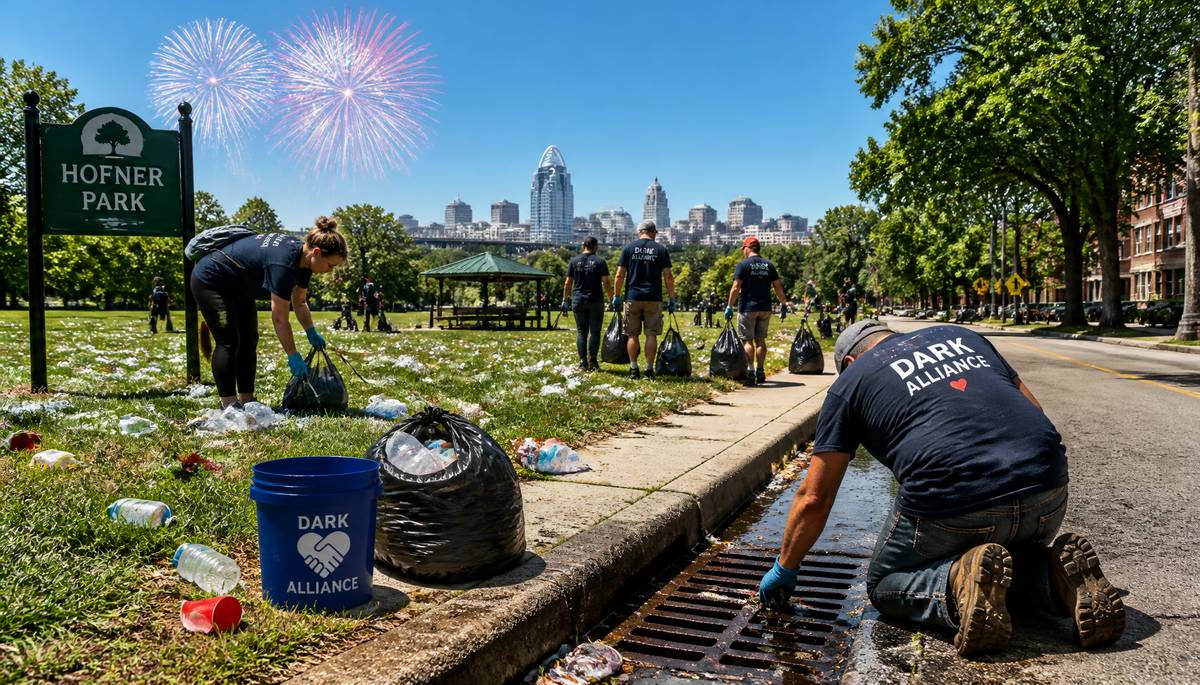 Fireworks are lovely, aren’t they? Ten minutes of “ooh” and “aah”, followed by a park looking like a skip has exploded.
That was the scene in Cincinnati’s Northside on the morning of 5 July, when Hofner Park was littered with bottles, cans and the usual sad little clues that people had enjoyed themselves and then wandered off. By 8am, though, Steve Greene and volunteers from his Facebook group, The DARK Alliance — short for Drive Actions to Revive Kindness — were already out sorting it.
Some worked the grass with grabbers, buckets and bags. Others tackled the less glamorous job: clearing roadside storm drains before the rubbish could be washed further into the system. It’s not flashy, but it’s practical. If the mess reaches the drains, it stops being an eyesore and starts becoming a wider problem.
Volunteer Cassi Rice had been at the festivities the night before and still turned up to help the next morning. Fair play. She said there’s real satisfaction in doing something useful, even if it seems small.
Greene started the group last year and hopes it becomes a formal organisation, but his point is simpler than that: you don’t need permission to be decent. Pick up litter. Help where you are. Do the thing.
Best of all, he isn’t raging at the people who left the mess. His view is that most people are basically good. Nice, that. Also useful, if you want to keep showing up.
Posted on 6 July 2026
Australian Cleaning Care Broadens Commercial Reach Across Sydney and NSW
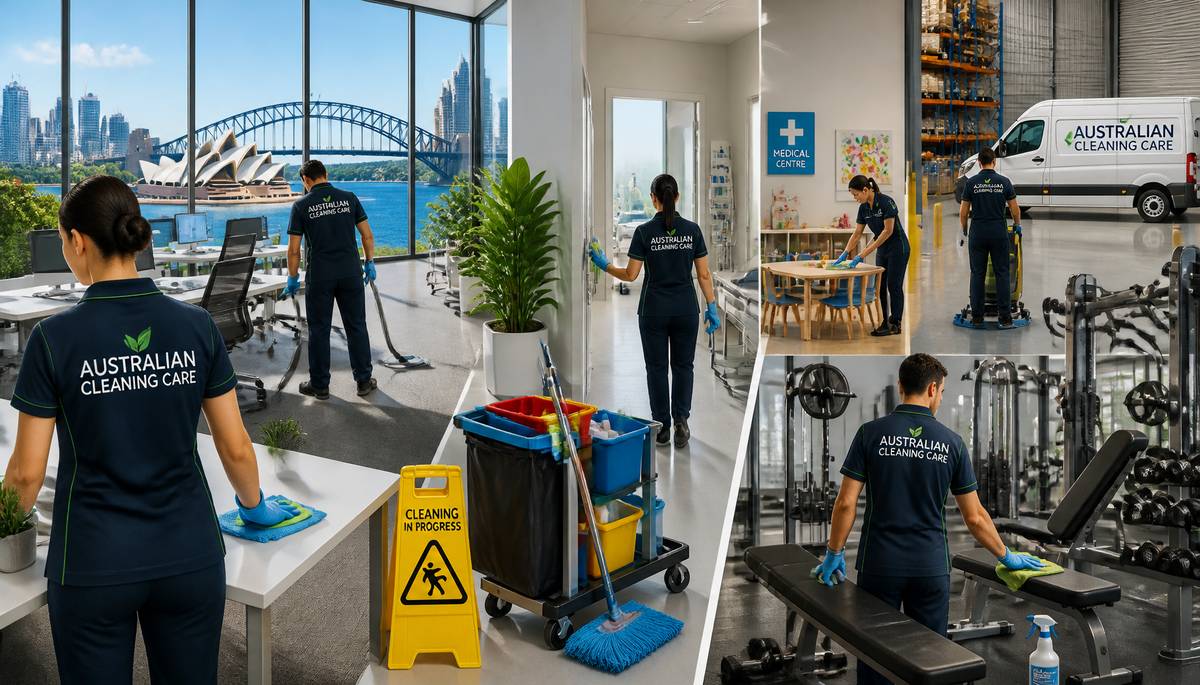 Cleanliness in a workplace is often treated as background, noticed most when it fails. Across Sydney and New South Wales, that background is growing more exacting, especially in places where health, safety, and daily order depend on disciplined routines. Into that need, Australian Cleaning Care has widened its commercial cleaning operations.
The Australian-owned company is extending services to more sites and sectors, including offices, medical centres, schools, childcare facilities, warehouses, gyms, commercial kitchens, strata properties, and industrial premises. The expansion, announced July 2, 2026, reflects rising demand for cleaning programs shaped to different operational risks rather than one general standard.
Its methods are formal and closely managed: ISO 9001, ISO 14001, and ISO 45001 certified systems; HACCP-based cleaning procedures; infection-control protocols; staff training; supervision; and routine monitoring and reporting. The aim is less spectacle than steadiness—services that remain compliant with workplace health and safety obligations while keeping facilities usable, safe, and presentable for workers and visitors.
For businesses seeking commercial cleaning in Sydney, including medical cleaning and office cleaning, the company’s growth is meant to increase reach without loosening control. Australian Cleaning Care says it will oversee the larger operation through stronger internal processes, performance tracking, and continued compliance with changing industry standards.
Posted on 2 July 2026
Commercial Cleaning Steps Out of the Shadows in 2026
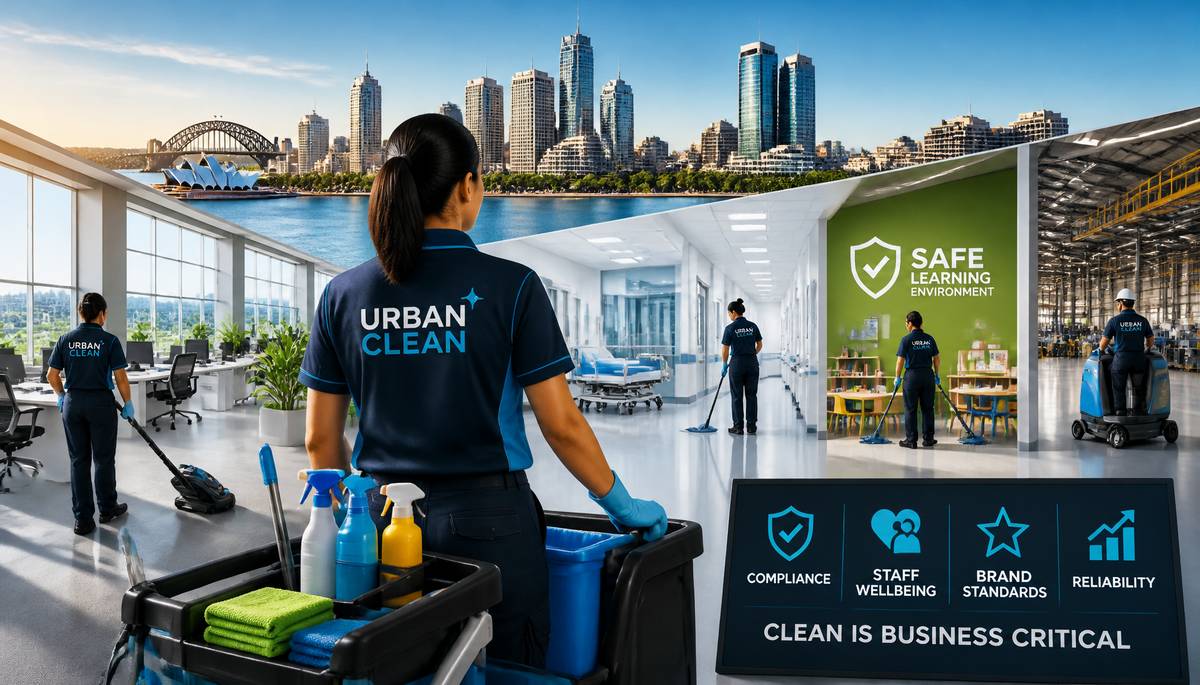 For years, commercial cleaning had the social status of a stagehand: essential, invisible, and only noticed when something went wrong. In 2026, that changes. Businesses are treating cleaning less like a background expense and more like operational insurance for health, safety, and credibility.
That shift is showing up everywhere. Across Australia, the sector is expected to bring in $20.1 billion in 2025–26, with more than 44,000 businesses employing over 209,000 people. Offices, hospitals, schools, government sites, and industrial facilities are all pushing demand higher. Globally, cleaning services are projected to expand by USD 24.93 billion from 2025 to 2030, driven by stricter hygiene expectations, commercial growth, and the continued move toward outsourcing.
The real change is not just scale; it is status. Cleanliness now sits in the same conversation as compliance, staff wellbeing, and brand standards. Companies want reliability, visible processes, and a level of professionalism that used to be optional.
Urban Clean is positioning itself as already fluent in this new language. Its model is built around structured systems, technology, workforce training, and professional service standards that many competitors are only now trying to implement.
In other words, the industry did not suddenly become important in 2026. It finally became impossible to ignore.
Posted on 29 June 2026
Japan Fans Leave Dallas Stadium Cleaner Than They Found It
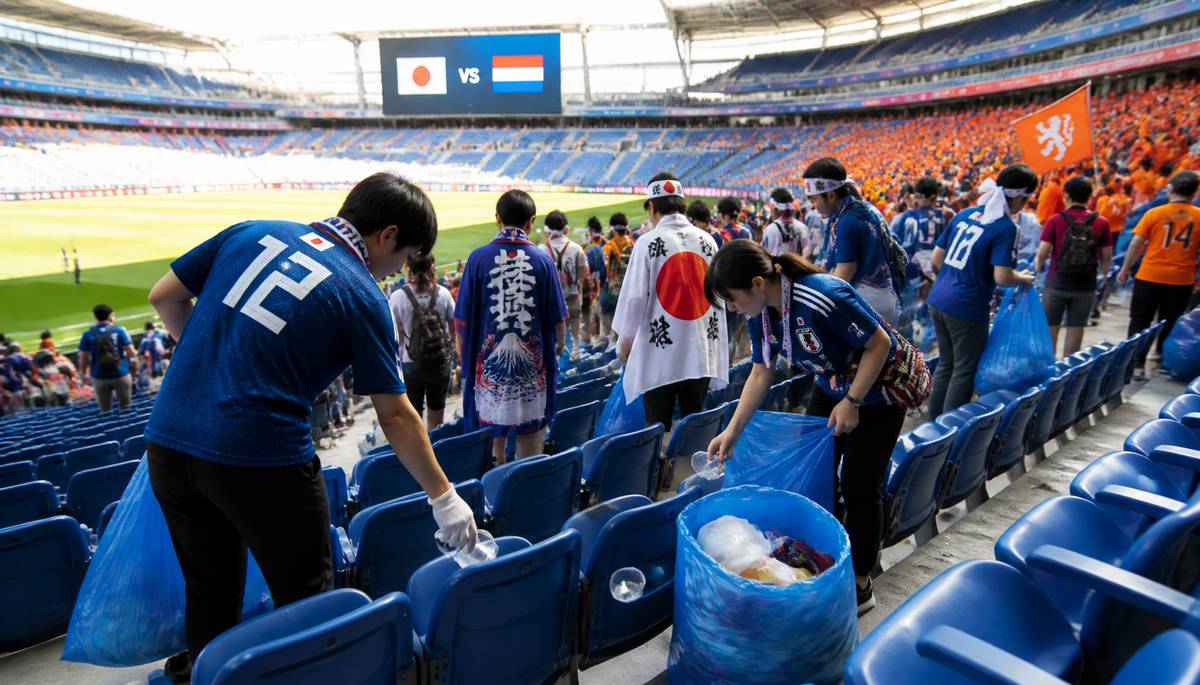 After Japan’s World Cup match with the Netherlands at Dallas Stadium, plenty of supporters did what football fans do: headed out. The Japanese fans did something far less common. They pulled out trash bags and started cleaning.
Photos now circulating online show hundreds of Japan supporters collecting cups, wrappers and other rubbish from their section. The team followed suit in its own way, leaving the locker room spotless without being asked. It’s the sort of thing that looks almost suspiciously decent, like finding a polite comment on the internet.
For Nina Shimaguchi of the Japan America Society of Dallas-Fort Worth, none of this was unusual. She pointed to a custom taught early in Japan, where students from elementary through high school clean hallways and restrooms themselves because schools generally do not use custodians.
She also connected the habit to Shintoism, rooted in Japan, with its belief that natural things hold spirit and meaning. In that view, even ordinary objects deserve care; she noted a saying that a single grain of rice carries seven spirits.
Outside the stadium, Dutch fans kept the World Cup mood going with songs and celebrations. Inside, Japan’s supporters left behind a quieter impression, one that has drawn millions of views and sparked interest in the culture behind it.
Japan next plays in Mexico on Saturday, then returns to Dallas Stadium in 10 days to face Sweden. Posted on 17 June 2026
Dyson’s V10 Konical Targets Hair Tangles, Hidden Dust, and Future Hands-Off Cleaning
Dyson has introduced the V10 Konical, a reworked version of its V10 cordless stick vacuum that seems built for one of modern life’s grimmest domestic betrayals: hair wrapping itself around absolutely everything.The $499.99 vacuum delivers up to 150 air watts of suction, runs for as long as 60 minutes per charge, and uses a motor spinning up to 110,000 rpm with 15 cyclones to keep fine dust and debris moving without a drop in suction.
Its biggest redesign is the new conical brush-bar system. Instead of letting long hair stage a mutiny inside the roller, two rotating conical bars are meant to pull in and de-tangle strands up to 25 inches long, sending them directly into the bin. For homes with pets, shedding humans, or both, that could be the most meaningful upgrade.
The V10 Konical also adds laser-style dust illumination on hard floors, exposing tiny debris that usually lurks in plain sight like a smug little secret.
Other features include three power modes—Eco, Medium, and Max—advanced HEPA filtration, capture of 99.99% of particles as small as 0.1 microns, hygienic point-and-shoot bin emptying, a click-in swappable battery, wall-mounted charging, and a 6.01-pound frame.
Most interestingly, it is designed to work with Dyson’s forthcoming Auto-Empty Dock, which will empty and recharge the vacuum between uses.
Posted on 8 June 2026
The Price of a Free Apartment Cleaning
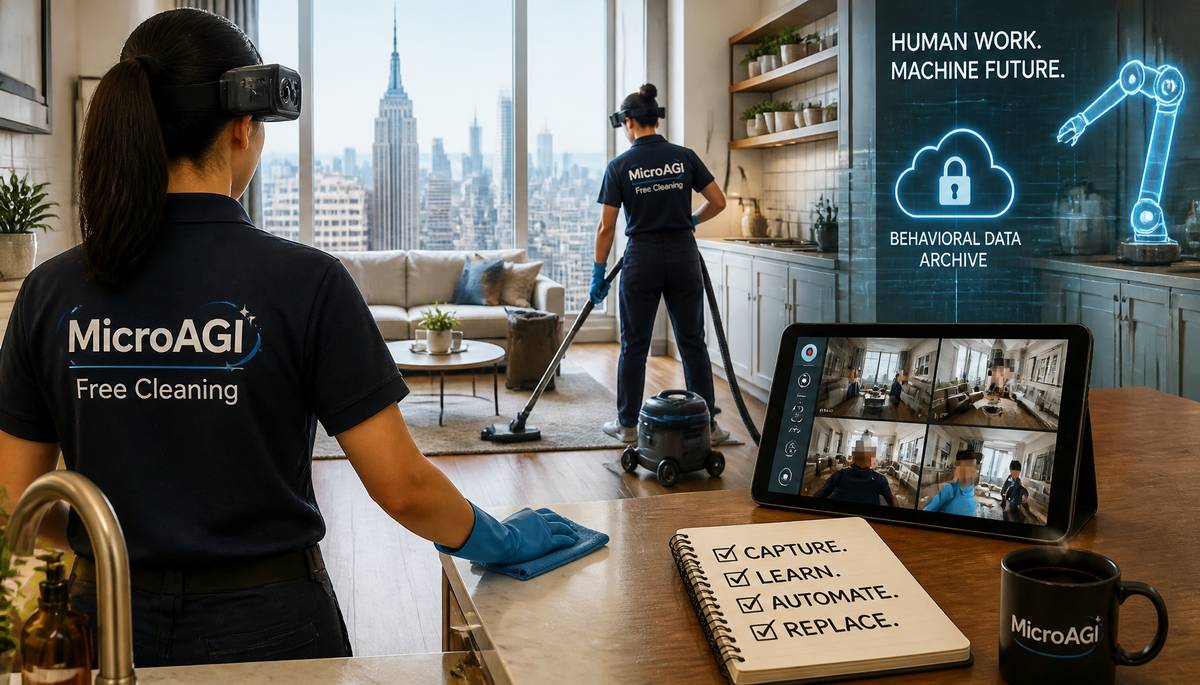 Free is never free; it just wears a sunnier dress. MicroAGI’s offer of no-cost apartment cleaning in New York arrives with a less visible fee: cameras fixed to workers’ heads, recording the choreography of domestic labor inside private homes.
The company says faces and personal details are blurred. That may soothe for a minute, like a damp cloth on a fever, but the larger transaction stays put. What is being collected is not merely dust and crumbs but behavioral data: how people move through kitchens, bathrooms, rugs, corners, clutter, the intimate geography of upkeep.
And the footage is not meant chiefly to make human cleaners better at cleaning. Its value lies in training machines to imitate and eventually replace them. Each wiped counter and vacuum pass becomes a lesson for automation, turning present labor into a draft of its own disappearance.
That is the sour little twist. Customers get one free cleaning. MicroAGI gets a durable archive of in-home data. Workers help assemble a system that may reduce the need for workers. Established cleaning businesses, built over years on trust, repeat clients, judgment, and the ordinary accountability of a person with keys to your apartment, are asked to compete with a model fed by their own trade.
A bargain, perhaps, but mostly for the company. Posted on 2 June 2026
The $150 Robot Maid: A Future Nobody Asked For
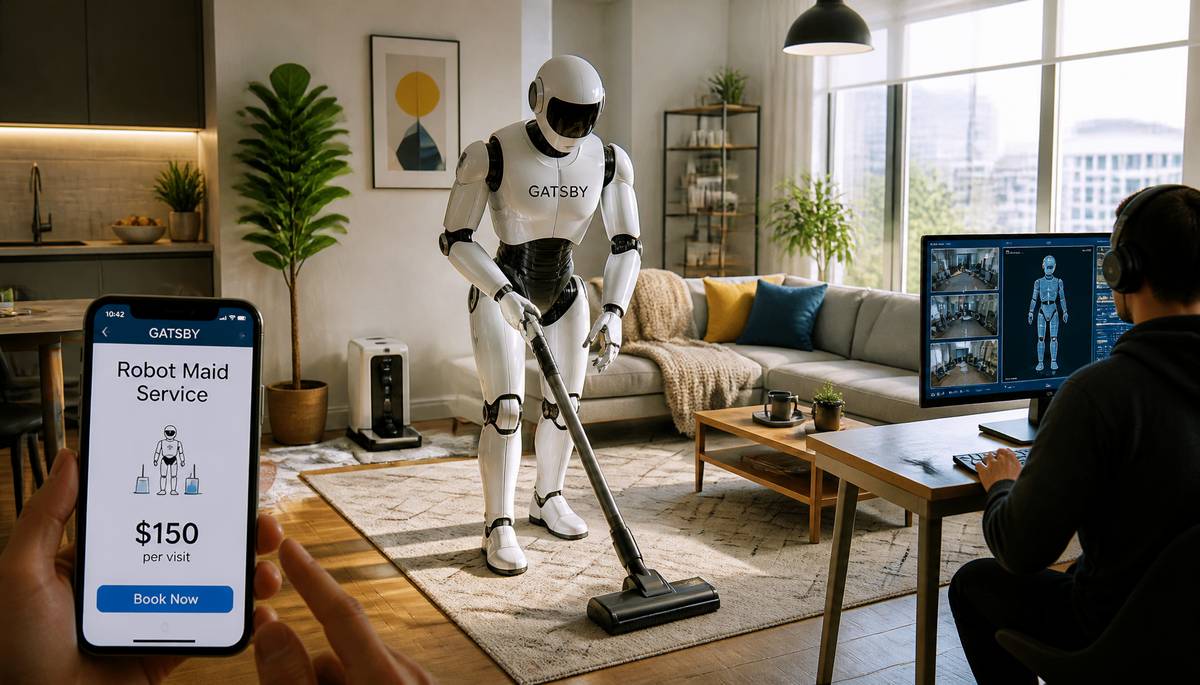 The arrival of humanoid robots in domestic cleaning is being marketed as a glimpse of the future. Gatsby, a San Francisco startup, recently made headlines by sending a humanoid robot to clean an apartment for a flat fee of $150. The company frames this as liberation from housework. But beneath the sleek marketing and futuristic imagery lies a reality worth questioning.
First, there is the price. At $150 per clean, this is hardly the robotic revolution ordinary households were promised. For decades, automation has been sold as a force that lowers costs and expands access. Yet Gatsby’s service enters the market at roughly the same price as many human cleaners. If a robot costs as much as a person, where is the disruption?
Then there is the question of autonomy. Gatsby advertises “no humans present,” but acknowledges that difficult tasks may involve remote human teleoperation. That matters. A remotely assisted robot is not quite the fully independent machine many consumers imagine. The distinction feels less like innovation and more like clever branding.
Privacy concerns also deserve scrutiny. A humanoid robot cleaning your home is effectively a mobile sensor platform moving through one of the most private spaces in your life. Customers deserve clear answers about what is recorded, who can access that data, and whether remote operators are watching.
Finally, there is the social question. Cleaning jobs are demanding and often undervalued, but replacing workers with premium-priced robots does not automatically solve that problem. Technology should improve life broadly—not merely create expensive novelties wrapped in Silicon Valley mythology. Posted on 1 June 2026
A Very Tidy Boom in the Global Cleaning Trade
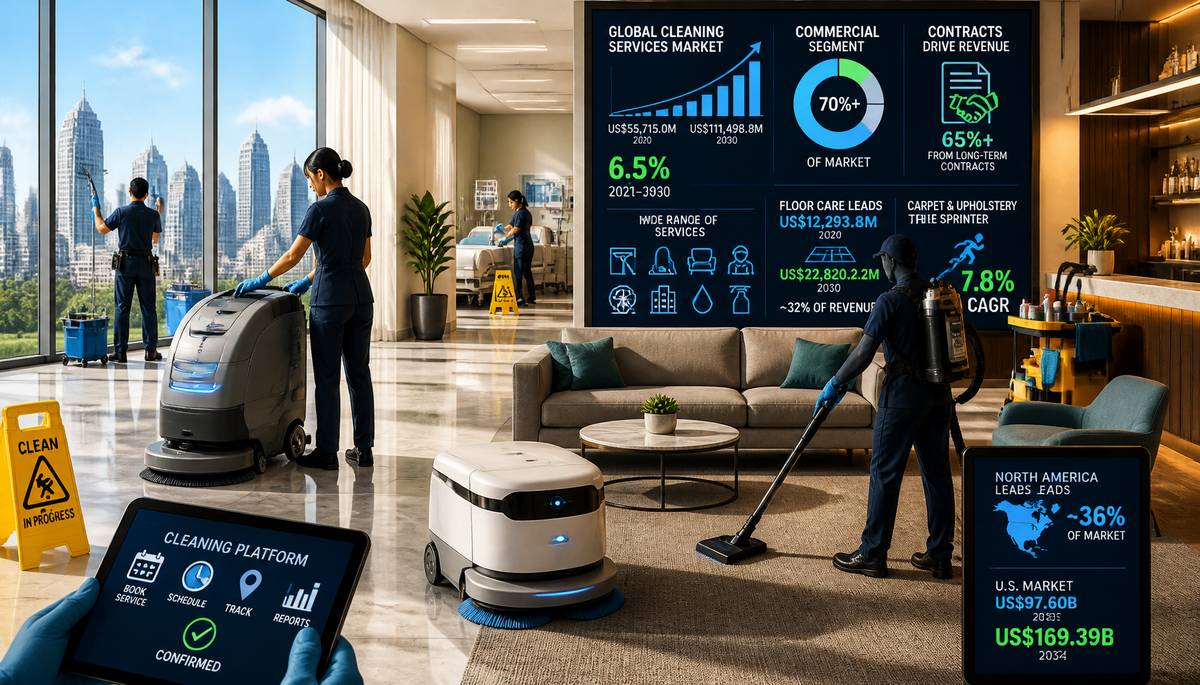 The world, it appears, is prepared to spend handsomely on soap, polish, and a determined assault on the carpet. The global cleaning services market, valued at US$55,715.0 million in 2020, is expected to climb to $111,498.8 million by 2030, a 6.5% CAGR from 2021 to 2030.
That rise rests on a simple modern creed: hygiene is no longer a household afterthought but an institutional obsession. Commercial work now commands more than 70% of the market, covering offices, healthcare sites, hospitality venues with bar and restaurant operations, and industrial buildings. Long-term contracts generate over 65% of revenue, giving the trade a pleasantly steady pulse.
The menu of services is broad: window and floor cleaning, vacuuming, furniture and carpet care, maid services, air duct work, post-construction cleanup, water damage restoration, and specialty disinfection. Floor care led in 2020 at $12,293.8 million and is set to reach $22,820.2 million by 2030, about 32% of revenue. Carpet and upholstery is the sprinter, with a 7.8% CAGR.
Technology has arrived with the briskness of a head butler: AI, smart dispensers, robotic scrubbers, digital booking platforms, and greener products are reshaping the field. Contract cleaning alone stood at $383.99 billion in 2024 and could hit $555.44 billion by 2030 at 6.4% CAGR.
North America supplies the largest takings, about 36%, with the U.S. at $97.60 billion in 2025 and projected to reach $169.39 billion by 2034. Posted on 31 May 2026
Tork Expands Global Push for More Inclusive Public Washrooms
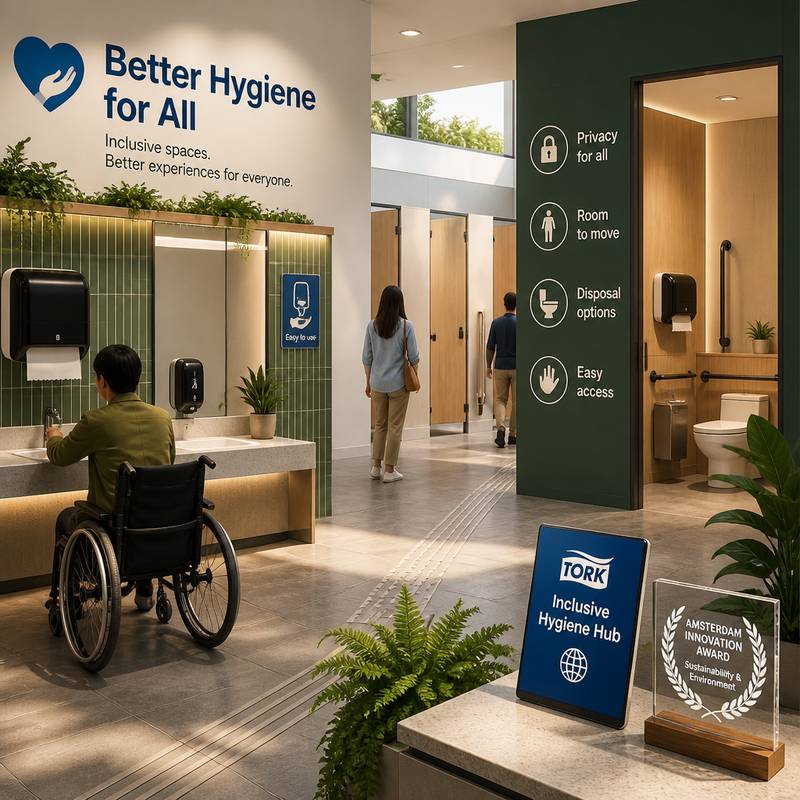 Public washrooms are one of those places where society really tells on itself. Tork, the Essity professional hygiene brand, is pushing a global Better Hygiene for All movement that asks business leaders, facility managers, cleaners, designers and everyday users to help make these spaces work for more people.
The company has expanded the initiative with a new Tork Inclusive Hygiene online hub, offering research, practical guidance, best practices and a place for users to submit ideas and feedback.
The business case is not subtle. Better washrooms can improve employee experience, customer satisfaction, brand reputation and revenue. Tork says poor facilities can send customers out the door early, make them spend less or keep them away altogether.
Its 2025 Tork Insight Survey, based on 11,500 people across 11 countries, found 54% face some kind of difficulty in public washrooms. Only one in five facilities meets basic cleanliness expectations.
A lot of the barriers are hidden in plain sight: lack of privacy for people with paruresis, cramped layouts or missing disposal options for those using catheters or ostomy bags, and dispensers that are tough to use for people with low hand strength or joint or muscle issues. Maintenance, layout and shared, tight spaces can also create problems for people with hygiene concerns.
This spring, Essity received an Amsterdam Innovation Award in the Sustainability & Environment category for the initiative.
Posted on 29 May 2026
Why Gum and Tape Residue Keep Coming Back
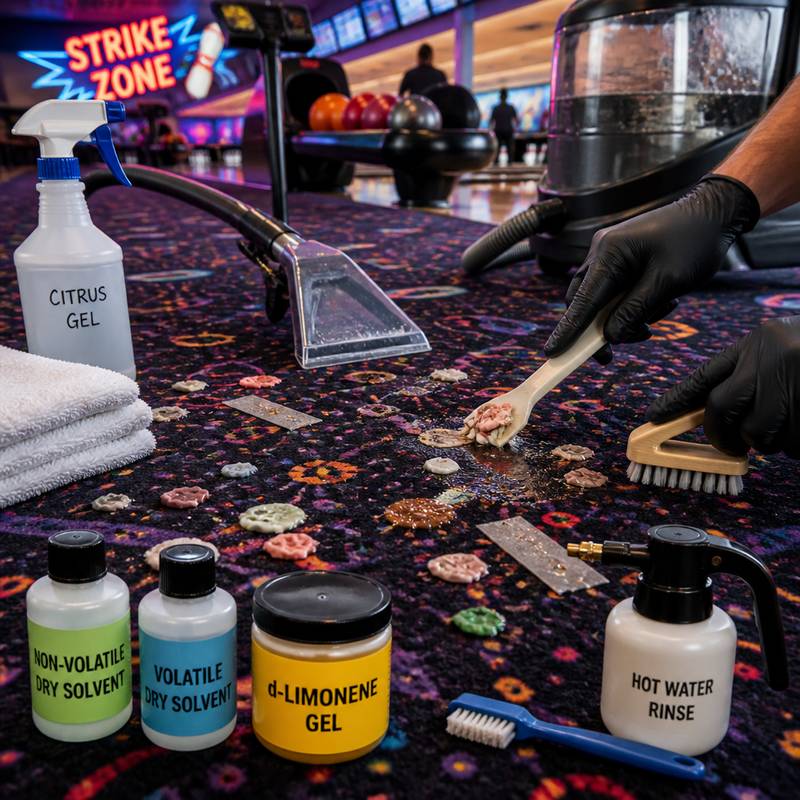 Chewing gum and carpet adhesive are less stains than tenancies: once established, they linger, retreat, then reassert themselves days later as grimy halos. In a house, one or two mashed wads are merely boorish. In a commercial site—say, a bowling alley with gum every few feet—they become a vocational crisis. Add the grey spoor left by duct tape used to pin down extension cords, seal seams, or fasten objects to carpet, and the cleaner inherits a problem that can look solved while remaining chemically alive.
The first task is subtraction. Lift off as much bulk material as possible with a plastic, metal, or bone spatula; sharp-tipped specialty tools help with stubborn deposits. Then comes softening. Hot-water extraction can loosen gum and adhesive, while steam vapor can transfer softened residue to a towel and reduce what remains for chemistry to tackle.
Solvents do the real excavation. Options include non-volatile dry solvent, volatile dry solvent, and gel products often formulated with d-Limonene. If non-volatile solvent is used, residue should be followed by a volatile rinse. Gel has the advantage of staying on the fibers rather than wandering off. Work it in with controlled agitation—teeth can help, provided they do not abrade the pile—allow up to five minutes dwell time, then rinse thoroughly with hot water and detergent.
Freezing sprays can fracture gum, but often leave tack behind. The overlooked truth is the final pass: solvent, agitation, rinse, again. Skip it, and the callback is already on its way.
Posted on 27 May 2026
Pretty Websites, Poor Sales: Why Home Service Sites Must Prove, Not Pose
 A handsome website can be as useless as a gilded shovel: fine to admire, poor at digging up business. John Clendenning, founder of Carpet Cleaner Marketing Masters, argues that many cleaning and restoration sites satisfy search engines yet fail the harder task of persuading human beings.
The common sins are plain. Titles stuffed with boasts such as Number One Carpet Cleaning Service in Wichita, Kansas prove nothing. What works better is proof: a clear guarantee to reclean or refund, visible owner photos, and an honest account of how the company came to be. Donald Miller’s StoryBrand framework fits that idea, though the principle is simpler—show the people behind the mop.
Even the phone number matters. Put it outside the upper-right corner, where eyes often travel in a Z-pattern, and results can fall by as much as 50%.
Clendenning’s rule is that proof defeats promise. A homepage link to a case study about work for a local Mercedes dealership, with George the general manager, before-and-after photos, and specifics on the results, beats vague claims and draws similar commercial clients.
He favors easy next steps over demands: an Ask the Expert form, a VIP rewards pop-up with a gift certificate, or a free in-home quote bundled with a spot remover gift set and a first-cleaning discount.
Google’s AI updates now reward genuine engagement, while instant builders from GoDaddy or Wix may produce pretty sites with none of the psychology, testing, or strategy that converts. His simplest test: show the site to someone who does not know the company and ask whether it invites trust or merely sits there like a brochure.
Posted on 25 May 2026
Britain Knows Bleach Is Harmful but Keeps Pouring It Anyway
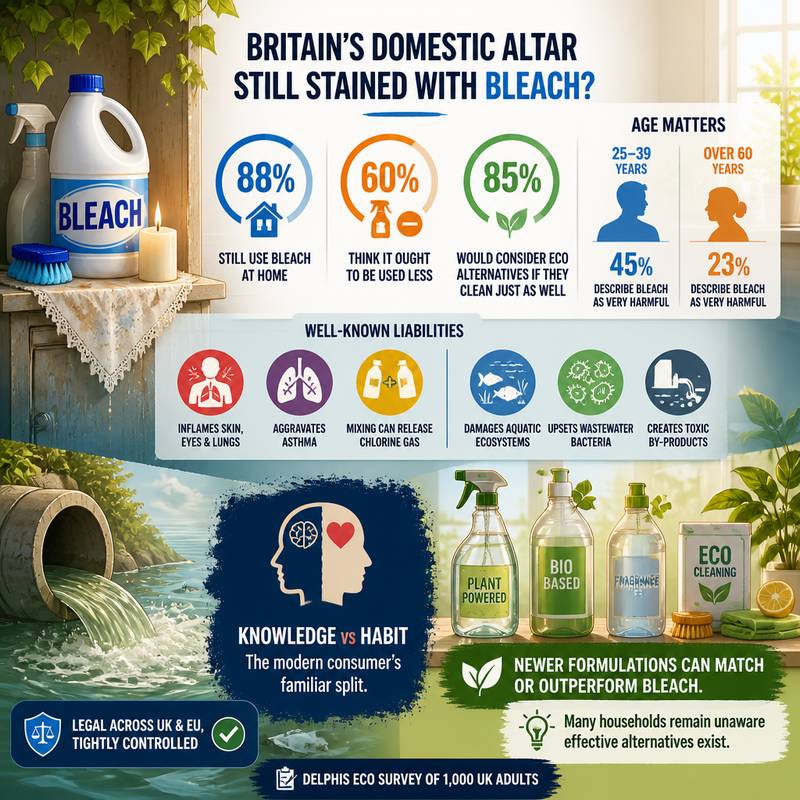 Britain’s domestic altar still seems to be stained with bleach. A Delphis Eco-commissioned survey of 1,000 UK adults found 88% go on using it at home even while regarding it as potentially damaging to health or the environment. Yet 60% also think it ought to be used less often: the modern consumer’s familiar split between knowledge and habit.
That ambivalence persists despite bleach’s well-known liabilities. It is legal across the UK and EU, but tightly controlled because it can inflame skin, eyes and lungs, aggravate asthma, and, when mixed with other cleaners, give off chlorine gas. Once sluiced into the drainage system, it may damage aquatic ecosystems, upset wastewater bacteria and generate toxic chlorinated by-products after reacting with organic matter.
The figures suggest the real obstacle is no longer ignorance but faith in efficacy. While bleach remains a household default, 85% said they would consider moving to eco-friendly alternatives if they were convinced those products cleaned just as well.
Age appears to matter. Among 25–39-year-olds, 45% described bleach as very harmful, against 23% of over-60s, hinting at a generational reappraisal of hygiene, toxicity and sustainability.
Posted on 24 May 2026
thecleaningdirectory.com (c)2009 - 2026